Sweet Innovations: Crafting Wholesome Treats for Every Craving
Anúncios
That familiar craving for something sweet doesn’t have to be a battle between indulgence and well-being. For too long, dessert has been cast as the villain in a healthy diet—a guilty pleasure to be earned or avoided entirely. But what if we reframed the narrative? A delicious revolution is simmering in kitchens worldwide, one that proves you can satisfy your sweet tooth with treats that are as nourishing as they are delightful.
This shift moves beyond the restrictive mindset of simply cutting out sugar and fat. Instead, it embraces a philosophy of smart substitution and ingredient innovation. Driven by a growing desire for mindful eating and whole foods, home bakers and professional chefs alike are discovering that wholesome ingredients can create incredible depth of flavor and texture. It’s not about deprivation; it’s about upgrading your pantry with natural sweeteners, healthy fats, and nutrient-dense flours to build a better dessert from the ground up.
Anúncios
Forget bland, joyless snacks that leave you unsatisfied. This guide will walk you through the art and science of crafting genuinely wholesome treats. We’ll explore simple ingredient swaps that make a huge impact, dive into quick no-bake recipes for when cravings strike, and reveal the techniques to master perfect moisture and flavor in your baking. Prepare to transform your favorite classics into guilt-free delights that everyone can enjoy.
The Sweet Revolution: Redefining Healthy Desserts
The idea that “dessert” and “healthy” are opposing forces is quickly becoming outdated. A quiet but powerful shift is happening in kitchens everywhere, moving away from the all-or-nothing mentality of restrictive dieting. Instead, people are embracing a more balanced approach where indulgence doesn’t require a side of guilt.
Anúncios
This movement is fueled by a growing desire for mindful eating. A recent Food & Health Survey from the International Food Information Council found that 52% of consumers actively seek out health benefits in their food choices. This conscious decision-making extends to every part of a meal, from quick and wholesome main dishes to the final sweet course. What most people miss is that this isn’t about bland, joyless food; it’s about making smarter ingredient swaps to create genuinely guilt-free delights that satisfy.
It’s about addition, not subtraction.
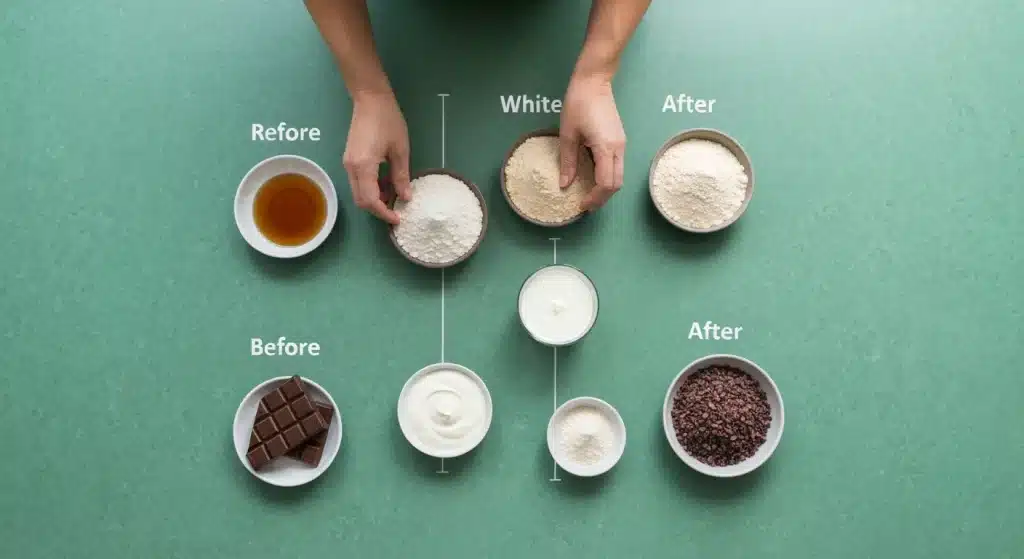
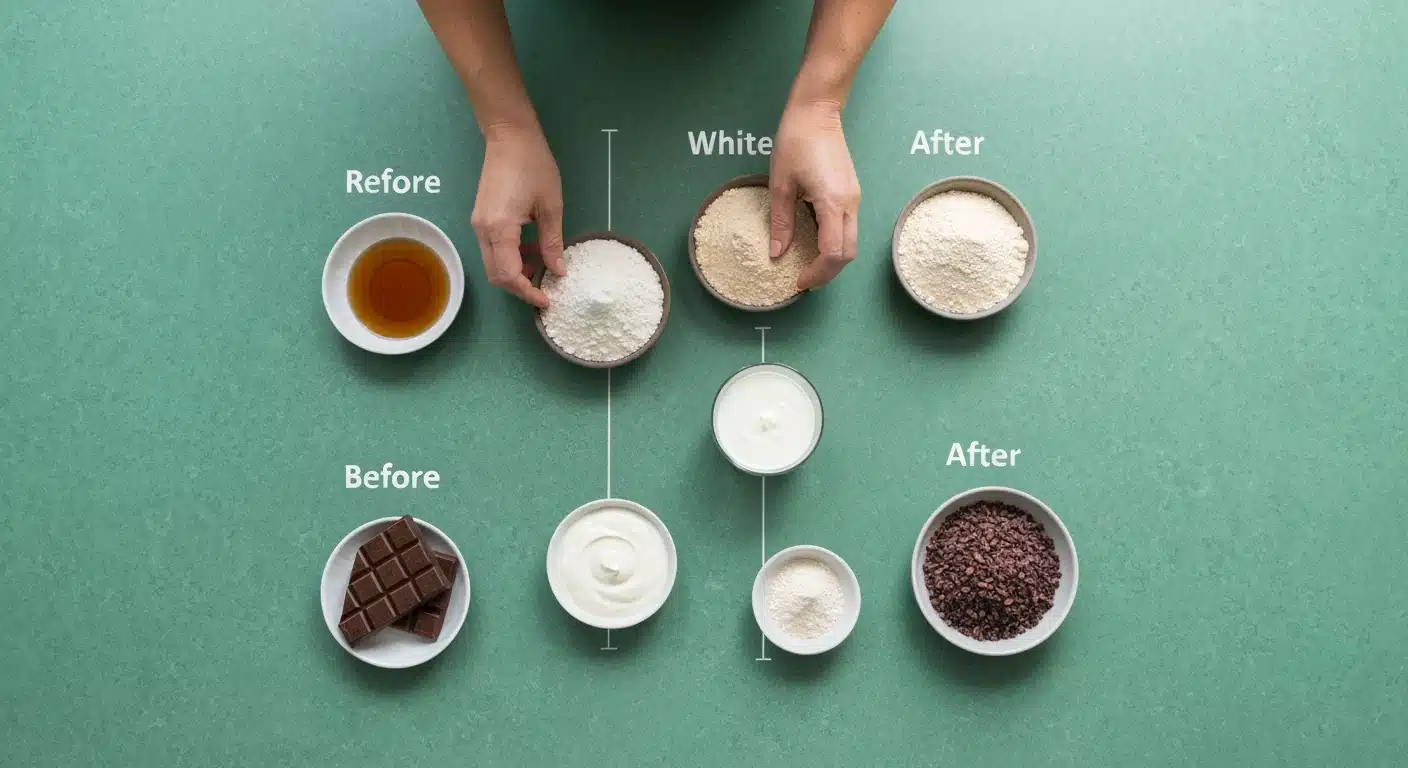
Think of it less like a science experiment and more like being a food DJ — you’re remixing the classics with better ingredients. You can swap refined sugar for maple syrup, white flour for almond flour, or heavy cream for Greek yogurt. The goal is to enhance nutrition without sacrificing the flavor and comfort we crave from our favorite treats. This new philosophy opens up a whole world of delicious and healthy dessert recipes that nourish the body and please the palate.
Smart Swaps: Your Guide to Healthier Ingredients
Transforming a decadent dessert into a healthier treat doesn’t require a degree in food science. It often comes down to simple, intelligent ingredient swaps. What most people miss is that these exchanges aren’t about deprivation; they’re about upgrading flavor and nutritional value without sacrificing the joy of a good dessert. Think of it less like a diet and more like a kitchen hack.
These small changes add up. By substituting just a few key ingredients, you can boost fiber, reduce refined sugars, and introduce healthy fats. It’s the secret behind many guilt-free delights that satisfy cravings.
Natural Sweeteners vs. Refined Sugars
The biggest villain in many dessert recipes is, unsurprisingly, refined white sugar. It provides sweetness but offers zero nutritional benefits and can lead to energy crashes. The good news is that nature provides plenty of delicious alternatives that bring their own unique flavors and nutrients to the party. But do they really pack the same punch?
In many cases, they’re even better. A report from the Cambridge University Press suggests that sweeteners like date paste can retain up to 73% of their original fiber content, which helps regulate blood sugar absorption. This simple swap makes your dessert work for you, not against you.
- Swap This: White Sugar
For This: Maple Syrup, Honey, or Coconut Sugar
Why: These natural sweeteners are less processed and contain trace minerals. Maple syrup, for example, offers antioxidants. Use about 3/4 cup of liquid sweetener for every cup of sugar, and reduce the other liquids in your recipe slightly. - Swap This: Sugar for fruit-based sweetness
For This: Mashed Banana or Unsweetened Applesauce
Why: This is a fantastic way to cut sugar while adding moisture and fiber. It works especially well in muffins, quick breads, and some cakes.
Fats: Good, Better, Best for Baking
Fats are necessary for creating tender, flavorful baked goods, but not all fats are created equal. While butter and processed vegetable oils are the standard, healthier options can deliver the same rich texture with added benefits. The underrated factor here is how these swaps can completely change the character of a dessert for the better.
Consider the avocado. Its creamy texture and neutral flavor make it an incredible substitute for butter in things like brownies and chocolate mousse—yes, really! This swap boosts heart-healthy monounsaturated fats and adds a silky finish. Just like you can find ways to create quick and wholesome main dishes, you can find quick ways to improve your desserts.
- Swap This: Butter
For This: Greek Yogurt, Avocado, or Nut Butter
Why: Greek yogurt adds protein and a slight tang, perfect for balancing sweetness. Avocado provides creaminess and healthy fats. Nut butters like almond or cashew bring their own flavor and protein, making them ideal for cookies and bars. - Swap This: Vegetable Oil
For This: Melted Coconut Oil or Light Olive Oil
Why: Both are less processed than typical vegetable oil. Coconut oil adds a subtle tropical note, while a light-tasting olive oil can be surprisingly neutral in many recipes.
With these smart swaps in your arsenal, you’re well-equipped to turn any recipe into a more nourishing indulgence. The next step is understanding how baking methods themselves can further enhance the health profile of your creations.
These ingredients don’t just add moisture, they contribute fiber and their own subtle sweetness, which is a significant bonus.
— Anna Valeriev, Pastry Chef & Author of ‘The Lean Pastry’
| Instead Of This (Traditional) | Try This Instead (Wholesome Swap) | The Benefit |
|---|---|---|
| Refined White Sugar | Maple Syrup, Date Paste, or Coconut Sugar | Adds trace minerals and fiber, with a lower glycemic impact. |
| All-Purpose White Flour | Almond, Oat, or Whole Wheat Pastry Flour | Boosts protein, fiber, and nutrients while reducing refined carbs. |
| Butter or Vegetable Oil | Avocado, Greek Yogurt, or Nut Butter | Increases healthy fats, protein, and moisture for a tender crumb. |
| Heavy Cream or Milk Chocolate | Coconut Cream or Dark Chocolate (70%+) | Provides dairy-free creaminess and a rich dose of antioxidants. |
Beyond the Oven: No-Bake & Quick Sweet Fixes
Sometimes the craving for something sweet hits hard, but the thought of preheating an oven and measuring flour feels like a monumental task. This is where the magic of no-bake desserts comes into play. These are treats built for speed and simplicity, often relying on refrigeration or simple assembly rather than heat. The underrated factor here is that they frequently use whole, unprocessed ingredients, making them healthier by default. These quick fixes are perfect for bridging the gap between meals or satisfying a post-dinner sweet tooth without derailing your nutritional goals.
Energy Bites: Fueling Your Day Sweetly
Energy bites are the ultimate grab-and-go snack, packed with protein, fiber, and healthy fats to combat that dreaded afternoon slump. A study from the *American Journal of Clinical Nutrition* found that a high-protein, high-fiber snack can improve satiety and reduce subsequent meal intake by up to 12%. Making them is less like baking and more like a simple, fun assembly project. They are dense, satisfying, and completely customizable. Here’s a basic framework to create your own:
- Combine 1 cup of rolled oats, 1/2 cup of a nut or seed butter (like almond or sunflower), and 1/3 cup of a liquid sweetener (honey or maple syrup) in a bowl.
- Add 1/2 cup of your “mix-ins.” This could be anything from chia seeds and flax meal for fiber to dark chocolate chips or dried cranberries for flavor.
- Mix everything until it’s well-combined and the texture is slightly sticky. If it’s too dry, add a tablespoon more of nut butter; if too wet, a bit more oats.
- Roll the mixture into small, bite-sized balls and place them on a parchment-lined plate.
- Refrigerate for at least 30 minutes to firm up. They can be stored in an airtight container in the fridge for up to a week.
This simple formula provides a consistent boost without the sugar crash of a typical candy bar.
Layered Parfaits: A Visual & Taste Delight
A parfait feels elegant, but it’s one of the easiest quick sweet treats you can assemble in minutes. The beauty is in the layers—a visual cue of the different flavors and textures you’re about to enjoy. What most people miss is that a well-built parfait can be a complete mini-meal, containing protein, carbohydrates, and healthy fats. It’s a far cry from a simple scoop of ice cream, offering more complex nutrition and satisfaction. Building a beautiful and healthy parfait is simple:
- Start with a base layer of plain Greek yogurt or a dairy-free alternative for a protein punch.
- Add a layer of fresh or frozen berries. Berries are low in sugar and high in antioxidants.
- Sprinkle in a crunch layer. This could be a low-sugar granola, a handful of chopped nuts, or even some of the aforementioned energy bite mixture crumbled up.
- Repeat the layers until your glass is full, finishing with a final dollop of yogurt and a few berries on top.
While some desserts feel like a major project, these parfaits are more like the speedy and wholesome meals of the sweet world.
Frozen Yogurt Bark: Customizable & Refreshing
For a treat that tackles both sweet cravings and the need for something cool and refreshing, frozen yogurt bark is an amazing option. It requires just a few ingredients and a bit of freezer time. It’s also a fantastic way to use up leftover fruits or nuts before they go bad—a win for your wallet and your taste buds. The process is almost foolproof and offers endless variety. You can find more inspiration for managing sugar in our detailed guide to satisfying sweet cravings with wholesome treats. To make it, simply spread a layer of your favorite yogurt (Greek works best for its thickness) on a parchment-lined baking sheet. Swirl in a touch of honey or maple syrup if desired, then sprinkle your toppings all over. Freeze until solid—usually about 2-3 hours—then break it into pieces.
Flavor Combinations for Yogurt Bark
The real fun of yogurt bark is in the toppings. You can go in any direction, from fruity to decadent. Need some ideas to get started?
- Berry Blast: Sliced strawberries, blueberries, and raspberries with a sprinkle of hemp seeds.
- Tropical Escape: Diced mango, toasted coconut flakes, and macadamia nuts.
- “Cookie Dough”: A swirl of almond butter, a dash of vanilla extract, and a generous sprinkle of mini dark chocolate chips.
- Pistachio Rose: Crushed pistachios, a drizzle of honey, and a pinch of edible rose petals for a more technical flavor.
These no-bake options prove that treating yourself doesn’t require a lot of time or a long list of processed ingredients. The next step is simply choosing which one to try first.
Mastering Texture & Flavor in Healthy Baking
The biggest hurdle in healthy baking isn’t just cutting calories; it’s preventing your treats from turning out dense, dry, or bland. Sugar and fat are texture workhorses, providing moisture, tenderness, and that satisfying chew. When you reduce them, you need clever replacements to fill the gap. It’s not about subtraction, but smart substitution.
Achieving Perfect Moisture Without Excess Fat
Fruit purées are your secret weapon for creating moist baked goods. Unsweetened applesauce, mashed banana, and even avocado can often replace up to 75% of the oil or butter in a recipe. Pastry chef Anna Valeriev, author of ‘The Lean Pastry’, confirms this. “These ingredients don’t just add moisture,” Valeriev explains, “they contribute fiber and their own subtle sweetness, which is a significant bonus.” This approach is central to many modern healthy dessert recipes that don’t compromise on texture.
Greek yogurt and buttermilk also work wonderfully.
The acidity in these dairy products helps to tenderize gluten, resulting in a softer crumb in cakes and muffins. What’s the science behind it? It’s all about breaking down proteins for a more delicate result. Trying to bake without a good moisture source is like building a sandcastle with dry sand; it simply won’t hold its shape. These swaps provide the “water” that holds everything together beautifully.
Boosting Flavor Naturally: Spices, Zests, and Extracts
With less sugar to carry the taste, you must amplify other flavors. This is where your spice rack becomes your best friend. Spices like cinnamon, cardamom, and nutmeg create a warming sensation that our brains often associate with sweetness. A study from the Institute of Food Technologists found that the aroma of cinnamon can enhance the perception of sweetness by an average of 10%.
But why stop at spices? Freshly grated citrus zest—from lemons, limes, or oranges—adds a bright, sharp note that cuts through the richness of a dessert, making it taste less heavy. A high-quality vanilla or almond extract can also provide a depth of flavor that processed sugar simply can’t match (and please, use the real stuff, not imitation!). The underrated factor here is layering these elements to build a complex flavor profile. Experimenting with these combinations is key to crafting guilt-free delights.
This approach transforms your baking from a simple sweet treat into a more nuanced culinary experience.
Sweet Treats for Special Dietary Needs
Adapting your favorite desserts for specific dietary needs doesn’t mean sacrificing flavor or texture. With a few smart substitutions, creating guilt-free delights that everyone can enjoy is surprisingly straightforward. The key is understanding how different ingredients function and what makes a suitable replacement. It’s less about restriction and more about creative problem-solving in the kitchen.
Whether you’re avoiding gluten, dairy, or sugar, the world of alternative ingredients offers a vast toolkit. This isn’t about simply removing an item; it’s about building a new foundation for your treat. Think of it like swapping cotton thread for silk in a garment — the final product might look similar, but the feel and properties are entirely different.
Navigating Gluten-Free Baking: Flours and Binders
Gluten, the protein found in wheat, provides structure and elasticity in traditional baking. When you remove it, you need to consciously rebuild that structure. This is where alternative flours and binders come into play. According to Dr. Alistair Finch, a food scientist specializing in ingredient functionality, “The mistake most home bakers make is a one-to-one swap with a single gluten-free flour.” He explains that a blend of flours often yields the best results. For example, combining a protein-rich flour like almond with a lighter starch like tapioca can mimic the properties of all-purpose wheat flour more effectively.
The other half of the equation is the binder. Without gluten, your cookies would crumble and your cakes would collapse. Ingredients like xanthan gum or psyllium husk are required for creating viscosity and trapping air. They act as the glue holding everything together. A little goes a long way; just a quarter-teaspoon per cup of flour is often enough to provide the needed stability.
Pros and Cons of Popular GF Flours
- Almond Flour: High in protein and healthy fats, it creates a moist, dense crumb perfect for cakes and brownies. The downside is its high cost and distinct nutty flavor, which might not be suitable for all recipes. It can also lead to a denser bake if not balanced with lighter flours.
- Oat Flour: Made from ground oats, this option provides a soft, chewy texture and a mild, slightly sweet flavor. It’s excellent for cookies and muffins. it can make baked goods a bit gummy if used alone. Ensure you buy certified gluten-free oats if celiac disease is a concern.
- Coconut Flour: This flour is incredibly absorbent, meaning you need far less of it compared to other flours but much more liquid. It’s high in fiber and has a subtle coconut taste. What’s the main challenge? It can be tricky to work with, often resulting in a dry or crumbly texture if the liquid ratio isn’t perfect.
Plant-Based Perfection: Vegan Dessert Essentials
Creating delicious vegan sweets revolves around replacing dairy and eggs. For butter, high-quality vegan butter sticks or coconut oil are excellent substitutes that often perform just as well as the real thing. When it comes to milk, the choices are abundant—almond, soy, oat, and cashew milk all work well, with oat milk being a particularly creamy option for rich sauces and custards.
Eggs are slightly more complex because they serve multiple functions, from binding to leavening. Choosing a substitute depends on the goal. A “flax egg” (1 tablespoon ground flaxseed mixed with 3 tablespoons water) is a fantastic binder in cookies and brownies. For leavening in light cakes, a combination of baking soda and vinegar works wonders. Then there’s aquafaba—the liquid from a can of chickpeas—which can be whipped into a surprisingly stable meringue. Many of our general healthy dessert recipes can be easily adapted with these simple swaps.
Low-Carb & Keto-Friendly Sweet Ideas
For those on a low-carb or ketogenic diet, the focus shifts to minimizing sugar and using high-fat, low-carb flours. Almond and coconut flours are the stars here, creating a satisfying base for everything from cookies to cheesecakes. Avocado and full-fat cream cheese become powerful tools for creating rich, creamy textures without the carbs of traditional ingredients (—much better than having to cook a complex meal after a long day, which is why quick, healthy main dishes are also so popular).
A recent survey by the American Diabetes Association found that 68% of respondents with type 2 diabetes find managing sweet cravings to be a significant dietary challenge. This is where low-carb desserts can make a real difference. A chocolate avocado mousse or a cheesecake with an almond-flour crust can satisfy that desire for indulgence without spiking blood sugar.
The secret is in the sweetener.
Best Sweeteners for Low-Carb Desserts
- Erythritol: A sugar alcohol that has about 70% of the sweetness of sugar with almost no calories. It bakes well but can sometimes have a cooling “minty” aftertaste and may recrystallize when cooled.
- Monk Fruit: A natural sweetener derived from a small Asian fruit. It’s very sweet and has no aftertaste, but it’s often sold in a blend with erythritol to provide bulk and improve its baking properties.
- Stevia: A plant-based sweetener that is exceptionally potent. The challenge with stevia is a slightly bitter or licorice-like aftertaste that some people are sensitive to. Using it in combination with another sweetener can often mask this effect.
Ultimately, mastering dietary desserts is an exercise in experimentation. Start by following a tested recipe, but don’t be afraid to tweak ingredients to suit your personal taste and pantry.
Mindful Indulgence: Enjoying Sweets Responsibly
Creating wholesome treats is only half the equation; the other half is learning how to enjoy them as part of a balanced lifestyle. What many people forget is that a healthy relationship with food isn’t built on restriction. In fact, a study from the Journal of Consumer Research suggests that people can derive just as much satisfaction from smaller portions when they eat mindfully and savor the experience.
Deprivation is not the answer.
Instead of labeling foods as “good” or “bad,” focus on awareness. Treating food like music—where you appreciate every note instead of just having it as background noise—can completely change your perspective. Are you hungry, or just bored? Answering that simple question can prevent mindless snacking and help you appreciate the guilt-free delights you’ve prepared with intention.
To help build this habit, here is a simple checklist for mindful indulgence:
- Remove Distractions: Turn off the TV and put your phone away. Focus solely on the food.
- Engage Your Senses: Notice the colors, smells, and textures of your dessert before taking the first bite.
- Chew Slowly: Take your time with each mouthful to fully taste the flavors and recognize when you feel satisfied.
- Check In With Yourself: Pause midway through to assess your hunger and fullness levels.
Ultimately, a sustainable approach includes both delicious healthy dessert recipes and a positive mindset. This balance ensures that your entire diet, from quick main dishes to occasional sweets, supports your overall well-being.
Beyond the Recipe: A New Mindset for Sweets
The true innovation in healthy desserts isn’t just about swapping sugar for applesauce or butter for avocado. It’s about fundamentally changing our relationship with sweet food. By learning to build treats with nourishing, whole ingredients, we reclaim dessert as a joyful and integral part of a balanced lifestyle, rather than an occasional ‘cheat’ that exists outside of it. The skills you’ve explored here are more than just recipes; they are tools for empowerment in the kitchen.
So, what’s the next step on this journey? Don’t try to overhaul your entire recipe book overnight. Instead, pick one beloved classic—your family’s favorite chocolate chip cookie or a go-to birthday cake—and apply a single swap. See how it changes the texture, notice the nuanced flavor, and feel the difference. The most profound changes often begin with the smallest, most delicious experiments.
Frequently Asked Questions
What are the best natural sweeteners for healthy desserts?
Maple syrup, raw honey, date paste, and coconut sugar are excellent natural sweeteners. They are less processed than refined white sugar and often contain beneficial trace minerals and antioxidants, providing sweetness without a dramatic blood sugar spike.
Can I make healthy desserts taste as good as traditional ones?
Absolutely. The key is to build complex flavors using ingredients like high-quality vanilla extract, cinnamon, citrus zest, and rich dark chocolate. When you focus on enhancing taste with these elements, you rely less on pure sugar for flavor and often create a more satisfying and nuanced treat.
How can I make my favorite dessert recipes healthier?
Start with simple, high-impact swaps. Replace half the oil or butter with unsweetened applesauce or mashed banana to add moisture and fiber. You can also substitute half of the all-purpose flour with oat flour or whole wheat pastry flour to increase nutrients and protein.
Are healthy sweet treats suitable for weight loss?
When enjoyed in moderation, healthy sweet treats can be part of a weight loss plan. Because they often contain more fiber and protein, they can be more satiating than traditional desserts, helping you feel full and prevent overeating. portion control is still primary.
What are some quick, healthy dessert ideas for busy weeknights?
No-bake energy bites using oats and nut butter are incredibly fast and satisfying. Another great option is a layered parfait with Greek yogurt, fresh berries, and a sprinkle of nuts. For a refreshing treat, frozen yogurt bark topped with fruit and seeds takes only minutes to prepare before freezing.