Culinary Workforce Solutions: Tech Innovations Reshaping the US Industry by 2026
The culinary landscape in the United States is at a critical juncture. A persistent and growing labor shortage, exacerbated by recent global events, has forced restaurants, hotels, and food service establishments to rethink their operational strategies. The traditional model, heavily reliant on a readily available human workforce, is proving unsustainable. As we look towards 2026, the industry’s resilience and growth will depend significantly on its ability to embrace culinary tech solutions. These innovations aren’t just about replacing human labor; they’re about augmenting it, enhancing efficiency, improving staff retention, and ultimately, creating a more sustainable and appealing work environment.
Anúncios
The challenges are multifaceted: rising labor costs, a shrinking pool of skilled workers, and increased demand for efficiency and consistency. In response, a wave of technological advancements is poised to revolutionize how kitchens operate, how food is prepared, and how customers are served. From advanced robotics to sophisticated AI-driven analytics, these culinary tech solutions offer a beacon of hope for an industry grappling with unprecedented pressures.
This article will delve into seven crucial culinary tech solutions that are not only addressing the immediate labor shortage but are also fundamentally reshaping the US culinary workforce by 2026. We’ll explore how these innovations are creating new roles, streamlining existing processes, and paving the way for a more efficient, productive, and ultimately, more profitable future for the food service sector.
Anúncios
1. Advanced Robotics and Automation in the Kitchen
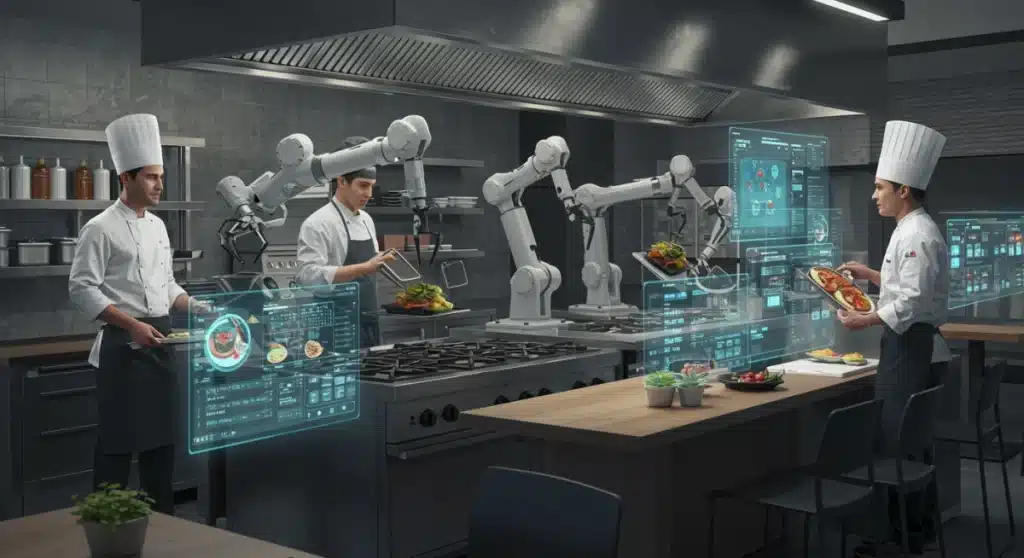
Perhaps the most visible and often discussed culinary tech solutions addressing labor shortages are advanced robotics and automation. While the image of a fully automated kitchen might still seem like science fiction, the reality is that robotic assistants are becoming increasingly common. These aren’t just simple fry cooks; modern culinary robots are capable of complex tasks, from precise ingredient preparation to grilling, stirring, and even plating.
Companies are developing robotic arms that can perform repetitive, high-volume tasks with incredible consistency and speed. This frees up human chefs to focus on more creative, complex, and customer-facing aspects of their roles. For instance, a robotic barista can perfectly craft hundreds of coffees an hour, reducing wait times and ensuring consistent quality, while human staff can focus on customer interaction and upselling.
The benefits extend beyond efficiency. Robots can operate in environments that might be challenging or hazardous for humans, such as extremely hot kitchens or during off-peak hours. They don’t require breaks, sick days, or benefits, offering significant cost savings over time. By 2026, we expect to see these robotic solutions integrated into a wider range of kitchen operations, from fast-casual chains to high-end dining, becoming an indispensable part of the culinary workforce solutions.
Furthermore, automation isn’t limited to robotic arms. Automated conveyor systems for food delivery, smart ovens that adjust cooking times based on food type, and dishwashing robots are all contributing to a more streamlined and less labor-intensive back-of-house operation. These advancements allow existing staff to be reallocated to roles that require human judgment, creativity, and empathy, thereby enhancing job satisfaction and overall service quality.
2. AI-Powered Predictive Analytics and Inventory Management
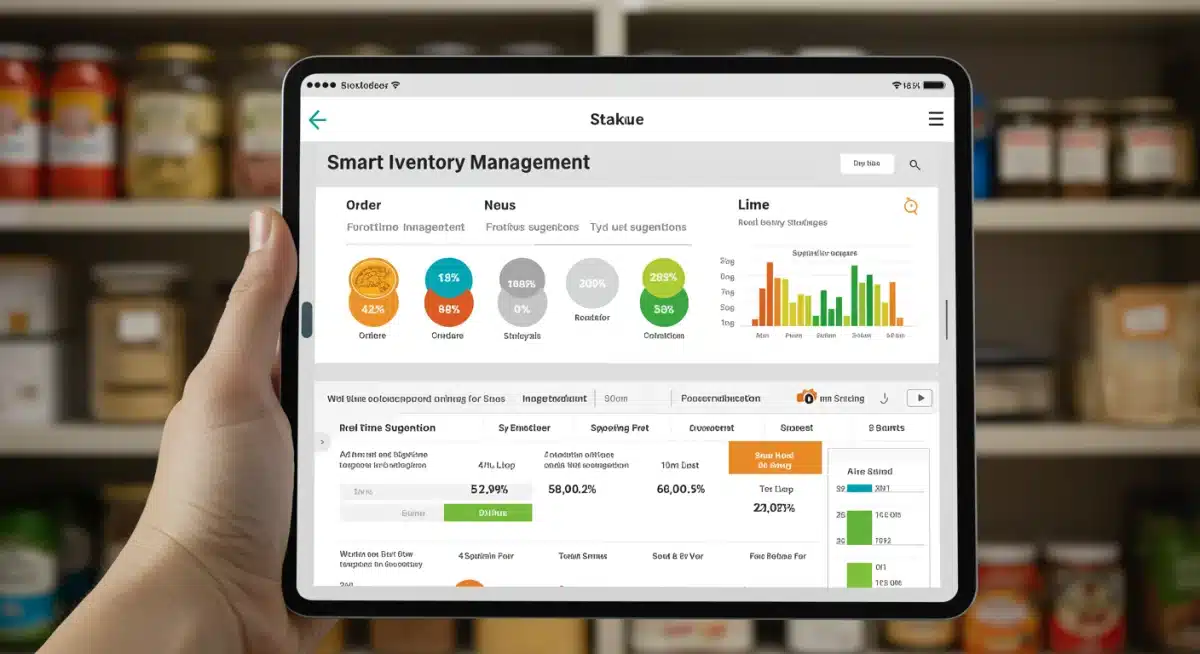
Food waste and inefficient inventory management are silent killers of restaurant profitability and significant contributors to operational stress. This is where AI-powered predictive analytics steps in as a powerful culinary tech solution. These systems use machine learning algorithms to analyze historical sales data, seasonal trends, weather forecasts, and even local events to predict demand with remarkable accuracy.
By accurately forecasting customer demand, restaurants can optimize their ingredient ordering, significantly reducing waste from over-stocking and preventing lost sales due to under-stocking. This not only saves money on ingredients but also reduces the labor hours spent on manual inventory counts, ordering, and managing spoiled goods.
Moreover, AI can identify patterns in ingredient usage, suggesting optimal portion sizes and even recommending menu adjustments based on ingredient availability and cost fluctuations. This level of insight allows kitchen managers to make data-driven decisions that improve efficiency and profitability. Imagine a system that automatically reorders ingredients when stock levels are low, taking into account delivery times and projected demand – this is the future of culinary tech solutions in inventory.
Implementing such systems requires an initial investment, but the long-term savings in food costs, labor, and waste reduction are substantial. For establishments struggling with the dual challenges of labor shortages and thin margins, AI-driven inventory management offers a strategic advantage, transforming a traditionally labor-intensive and error-prone process into a highly optimized and automated one.
3. Smart Kitchen Equipment and IoT Devices
The Internet of Things (IoT) is bringing unprecedented connectivity and intelligence to professional kitchens. Smart kitchen equipment, integrated with IoT devices, forms another cornerstone of modern culinary tech solutions. These devices can communicate with each other and with central management systems, providing real-time data and enabling remote control.
Smart ovens, for example, can be programmed to cook different dishes simultaneously at varying temperatures, monitor internal food temperatures, and even self-clean. Fryers can automatically filter oil, extending its lifespan and ensuring consistent food quality. Refrigerators can monitor temperature fluctuations and alert staff to potential spoilage issues, preventing costly waste.
Beyond individual appliances, IoT platforms can create a connected kitchen ecosystem. This allows managers to monitor equipment performance, energy consumption, and operational efficiency from a single dashboard, even remotely. This proactive approach to kitchen management reduces the need for constant human supervision, minimizes equipment downtime, and ensures that all appliances are operating at peak efficiency.
The data collected by these smart devices can also feed into AI-powered analytics systems, providing even deeper insights into kitchen operations. This continuous feedback loop helps identify bottlenecks, optimize workflows, and train staff more effectively. By 2026, fully integrated smart kitchens will be a common sight, contributing significantly to overcoming the labor shortage by making existing staff more productive and reducing the need for manual oversight.
4. AI-Powered Staffing and Scheduling Platforms
One of the most immediate impacts of the labor shortage is the challenge of effective staffing and scheduling. Traditional methods are often time-consuming, prone to human error, and struggle to adapt to fluctuating demand. AI-powered staffing and scheduling platforms represent a significant leap forward in culinary tech solutions for human resources.
These platforms leverage AI to analyze a multitude of factors: historical sales data, employee availability, skill sets, labor laws, predicted demand, and even individual employee preferences. They can automatically generate optimized schedules that minimize overtime costs, ensure adequate coverage during peak hours, and comply with all labor regulations. Furthermore, they can predict staffing needs with greater accuracy, allowing managers to proactively hire or adjust shifts.
Beyond scheduling, some platforms also assist in talent acquisition by identifying qualified candidates, streamlining the onboarding process, and even predicting employee retention risks. By automating these complex and time-consuming tasks, managers can dedicate more time to training, mentorship, and improving the overall employee experience, which is crucial for retaining staff in a competitive market.
The ability to dynamically adjust schedules based on real-time data – for example, increasing staff when an unexpected surge in customers occurs – brings unprecedented flexibility and efficiency to the workforce. This not only addresses the immediate problem of finding enough staff but also creates a more stable and predictable work environment for employees, which can help improve morale and reduce turnover in the long run. These culinary tech solutions are vital for managing the human element of the industry.
5. Enhanced Customer Self-Service Technologies
While often focused on the back-of-house, culinary tech solutions are also transforming the front-of-house experience, particularly through enhanced customer self-service technologies. Kiosks, mobile ordering apps, and tableside tablets are reducing the reliance on waitstaff for order taking and payment processing, freeing them up to focus on more personalized service and problem-solving.
Self-ordering kiosks, now common in fast-casual restaurants, allow customers to browse menus, customize orders, and pay at their own pace. This not only speeds up the ordering process but also reduces errors and increases average order value through intelligent upselling suggestions. Mobile ordering apps extend this convenience, allowing customers to order and pay before arriving, improving efficiency for both takeout and dine-in experiences.
Tableside tablets, particularly in full-service restaurants, empower diners to view menus, place orders directly to the kitchen, request refills, and pay their bills without waiting for a server. This doesn’t eliminate the need for servers but redefines their role, allowing them to act more as hospitality ambassadors and less as order takers. They can focus on ensuring guest satisfaction, recommending dishes, and creating a memorable dining experience.
By shifting routine transactional tasks to technology, restaurants can operate with fewer front-of-house staff while maintaining or even improving service quality. This is a crucial strategy for managing labor costs and optimizing staffing levels in the face of a persistent shortage, making these self-service options key culinary tech solutions.
6. Ghost Kitchens and Centralized Production Facilities
The rise of ghost kitchens and centralized production facilities is a structural culinary tech solution that fundamentally alters the traditional restaurant model. These facilities operate without a storefront or dining area, focusing solely on preparing food for delivery or takeout. They are often optimized for efficiency, utilizing specialized equipment and streamlined workflows to produce high volumes of food with minimal staff.
Centralized production facilities take this a step further, preparing components or entire dishes for multiple restaurant brands or locations. This allows for economies of scale, bulk purchasing, and highly efficient, specialized labor. For example, a central kitchen might handle all dough preparation for a chain of pizzerias, or all sauce production for several different restaurant concepts.
The benefits in terms of labor optimization are significant. Instead of needing a full kitchen staff at every location, restaurants can consolidate labor in a few highly efficient hubs. This reduces the overall demand for skilled culinary professionals across numerous sites and allows for better utilization of specialized equipment and talent.
Furthermore, ghost kitchens often leverage automation and advanced kitchen technology more extensively, as they are not constrained by the traditional dining experience. They can be designed from the ground up for maximum efficiency and technological integration, making them powerful culinary tech solutions for navigating the labor shortage and expanding reach while controlling costs.
7. Virtual Reality (VR) and Augmented Reality (AR) for Training
Training new culinary staff is a time-consuming and resource-intensive process, especially with high turnover rates. Virtual Reality (VR) and Augmented Reality (AR) are emerging as innovative culinary tech solutions to revolutionize training and skill development in the industry.
VR simulations can immerse new hires in a realistic kitchen environment, allowing them to practice complex tasks like operating specialized equipment, managing rush hour scenarios, or even practicing intricate plating techniques without the risk of costly mistakes or wasting ingredients. This hands-on, risk-free learning environment can significantly accelerate the onboarding process and improve skill retention.
AR, on the other hand, can provide real-time guidance within an actual kitchen setting. Imagine a new cook wearing AR glasses that overlay instructions, recipes, or safety warnings directly onto their field of view as they work. This ‘just-in-time’ learning support can boost confidence, reduce errors, and allow less experienced staff to perform complex tasks more effectively.
These technologies not only make training more engaging and efficient but also help standardize procedures across multiple locations, ensuring consistent quality. By reducing the time and resources required for training, VR and AR address a critical aspect of the labor shortage: the need to quickly and effectively bring new talent up to speed. This makes them invaluable culinary tech solutions for building a more skilled and adaptable workforce.
The Future of the US Culinary Workforce: A Symbiotic Relationship with Technology
The integration of these culinary tech solutions is not merely a stop-gap measure but a fundamental shift in how the US culinary industry will operate by 2026 and beyond. It’s a move towards a symbiotic relationship between human talent and advanced technology, where each augments the other’s strengths.
For employees, this means a shift away from repetitive, physically demanding, or dangerous tasks towards roles that require creativity, critical thinking, customer interaction, and the ability to manage and work alongside technology. New roles, such as ‘robot technicians,’ ‘AI kitchen managers,’ and ‘data-driven sous chefs,’ will emerge, requiring different skill sets but offering potentially higher wages and more engaging work environments.
For businesses, these innovations promise greater efficiency, reduced operational costs, improved consistency, and enhanced resilience against future labor market fluctuations. The initial investment in these technologies can be significant, but the long-term returns in terms of profitability, sustainability, and competitive advantage are undeniable. Restaurants that embrace these culinary tech solutions proactively will be better positioned to thrive in an increasingly challenging landscape.
It’s crucial for culinary schools, industry associations, and government bodies to also adapt, focusing on training programs that equip the next generation of culinary professionals with the skills needed to navigate this technologically advanced future. The culinary world is not losing its human touch; rather, it’s evolving, allowing human creativity and passion to flourish even more, supported and amplified by the power of technology.
Conclusion: Embracing Innovation for a Resilient Culinary Future
The US culinary industry stands on the precipice of a dramatic transformation. The labor shortage, while a formidable challenge, has also served as a powerful catalyst for innovation. The seven culinary tech solutions discussed – from advanced robotics and AI-powered analytics to smart kitchens, self-service technologies, ghost kitchens, and VR/AR training – offer a comprehensive roadmap for navigating these turbulent times.
By 2026, these technologies will be far more pervasive, creating a more efficient, sustainable, and ultimately, more attractive industry for both entrepreneurs and employees. The future of the culinary workforce will be defined by its ability to intelligently integrate these tools, fostering a new era of culinary excellence where technology empowers human creativity and ensures operational stability. Embracing these innovations is not just an option; it’s a necessity for any culinary business aiming for long-term success and resilience in the dynamic US market.