Master Meal Prep: Shave 1 Hour Off Weekly Cooking by March 2026
Anúncios
In our increasingly busy lives, finding extra time feels like striking gold. For many, the kitchen can be a significant time sink, with daily cooking routines eating into precious hours. But what if you could reclaim an hour of your weekly cooking time, consistently, by March 2026? It’s not just a dream; it’s an achievable goal with the power of efficient meal planning. This comprehensive guide will walk you through the strategies, tips, and mindset shifts required to transform your kitchen habits and free up valuable time.
The concept of efficient meal planning extends beyond just deciding what to eat. It encompasses smart grocery shopping, strategic food preparation, and clever cooking techniques that minimize effort without compromising on taste or nutrition. By adopting a systematic approach, you can drastically reduce the daily scramble, the impromptu takeout orders, and the general stress associated with getting meals on the table.
Anúncios
Imagine having more time for hobbies, family, or simply relaxing. This is the promise of mastering efficient meal planning. We’ll delve into everything from setting realistic goals to advanced batch cooking, ensuring you have all the tools to hit that March 2026 target.
Understanding the Time Drain: Why Cooking Takes So Long
Before we can save time, we need to understand where it’s being lost. For many, cooking time isn’t just the active time spent over the stove; it includes:
Anúncios
- Decision Fatigue: Standing in front of the fridge wondering what to make, or endlessly scrolling through recipes.
- Unplanned Grocery Runs: Realizing you’re missing a key ingredient mid-recipe.
- Inefficient Prep: Chopping vegetables one by one, measuring ingredients as you go, and cleaning as you cook (though some cleaning as you go is good, excessive stops can slow you down).
- Repetitive Tasks: Performing the same basic prep (like washing and chopping) every single day.
- Lack of a System: No clear plan, leading to reactive cooking rather than proactive preparation.
Identifying these time sinks is the first crucial step towards implementing efficient meal planning. Once you recognize the patterns, you can begin to introduce targeted solutions that directly address these inefficiencies.
Setting Your Goal: Shaving 1 Hour Off Weekly Cooking by March 2026
A goal without a plan is just a wish. Our specific goal is to reduce weekly cooking time by one hour by March 2026. This isn’t an overnight transformation; it’s a gradual process of building sustainable habits. Breaking it down, this means saving roughly 8-10 minutes per day, or consolidating a larger chunk of time on one or two days. This target is realistic and achievable with consistent effort.
The Power of Incremental Changes
Don’t aim for perfection from day one. Instead, focus on small, consistent improvements. Maybe this week you focus on a better grocery list. Next week, you try pre-chopping one vegetable. These small victories accumulate, leading to significant time savings over the long term. Efficient meal planning thrives on consistency and adaptability.
Phase 1: The Foundation of Efficient Meal Planning (Months 1-3)
Step 1: The Weekly Meal Plan – Your Blueprint for Success
The cornerstone of efficient meal planning is a well-thought-out weekly meal plan. This isn’t about rigid adherence but rather a flexible framework. Dedicate 15-30 minutes once a week (e.g., Sunday morning) to plan out your meals for the coming days.
- Assess Your Schedule: Look at your week. Are there late nights, early mornings, or days you know you’ll be too busy to cook? Plan quick meals or leftovers for those days.
- Consider Your Ingredients: What do you already have on hand? Build meals around existing pantry staples to reduce waste and grocery costs.
- Theme Nights: ‘Taco Tuesday,’ ‘Pasta Wednesday,’ ‘Fish Friday’ can simplify decision-making.
- Repurpose Ingredients: Can cooked chicken from one meal be used in a salad or sandwich the next day? This is a core principle of efficient meal planning.
- Start Simple: Don’t plan seven gourmet meals. Begin with 3-4 planned dinners, and leave room for flexibility or easy options like eggs or frozen pizza.
Step 2: The Smart Grocery List
Once your meal plan is set, create a detailed grocery list based on the ingredients you need. Categorize your list by supermarket sections (produce, dairy, pantry, meat) to minimize time spent wandering aisles. Stick to your list to avoid impulse buys and reduce unnecessary trips.
- Check Your Pantry First: Before writing anything, see what you already have.
- Categorize: Group similar items together on your list.
- Quantify: Note down how much of each item you need (e.g., ‘2 yellow onions,’ ‘1 bunch cilantro’).
- Online Shopping/Curbside Pickup: If available, these services can drastically cut down grocery shopping time, a key component of efficient meal planning.
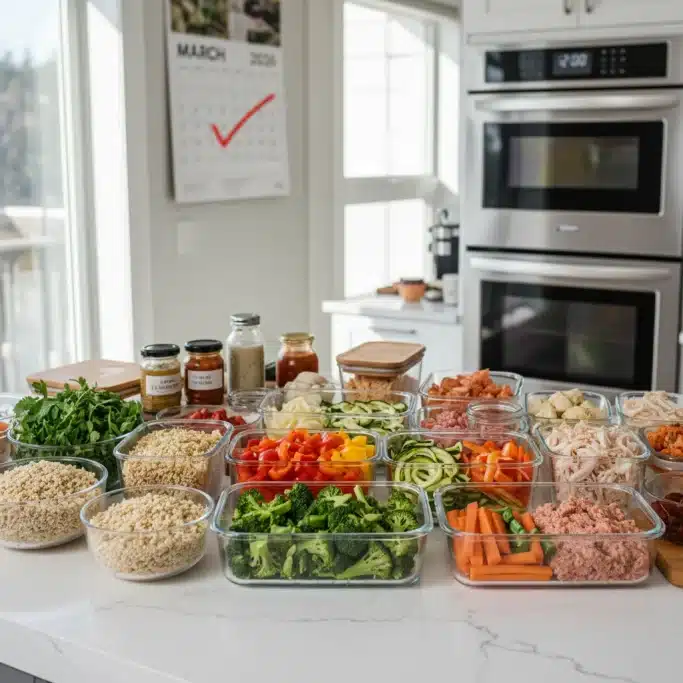
Step 3: The Weekly Prep Session (The Power Hour)
This is where significant time savings are made. Designate 1-2 hours once a week (often dubbed a ‘power hour’ or ‘meal prep Sunday’) for preliminary food preparation. This is a game-changer for efficient meal planning.
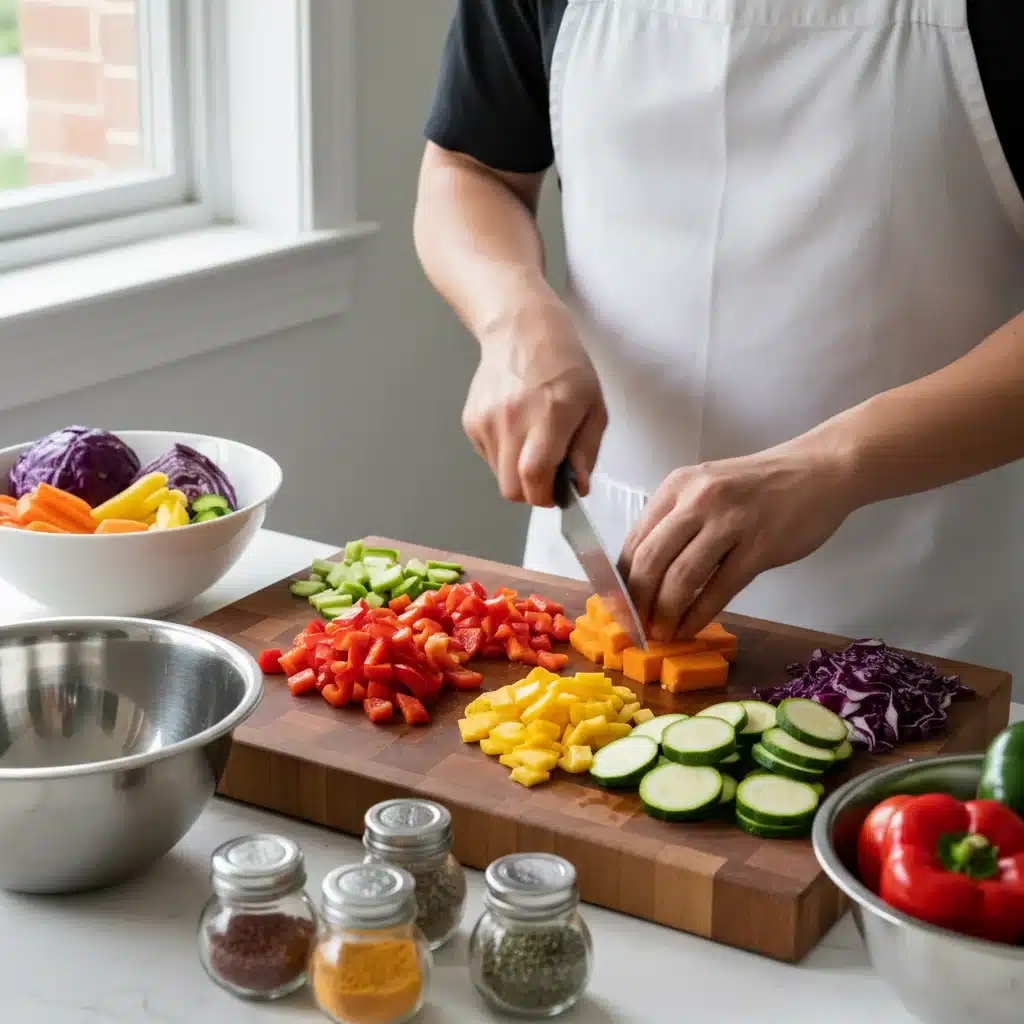
- Wash and Chop: Wash and chop all vegetables for the week. Store them in airtight containers.
- Cook Grains: Cook a large batch of rice, quinoa, or pasta that can be used in multiple meals.
- Roast Vegetables: Roast a sheet pan of various vegetables (broccoli, sweet potatoes, bell peppers) to add to salads, wraps, or as a side dish.
- Cook Proteins: Grill or bake a large quantity of chicken, ground meat, or lentils.
- Make a Dressing/Sauce: Prepare a homemade vinaigrette or sauce that can elevate several meals.
Phase 2: Optimizing Your Kitchen & Techniques (Months 4-7)
Step 4: Kitchen Organization for Speed
A well-organized kitchen is an efficient meal planning kitchen. Ensure frequently used tools and ingredients are easily accessible. Decluttering and creating dedicated zones can shave minutes off your daily routine.
- Designated Zones: Keep cutting boards and knives near your prep area, spices near the stove.
- Clear Countertops: Minimize clutter to maximize workspace.
- Proper Storage: Invest in good quality, stackable, airtight containers for prepped ingredients and leftovers.
- Sharp Knives: A sharp knife is safer and more efficient than a dull one.
Step 5: Master Batch Cooking and Freezing
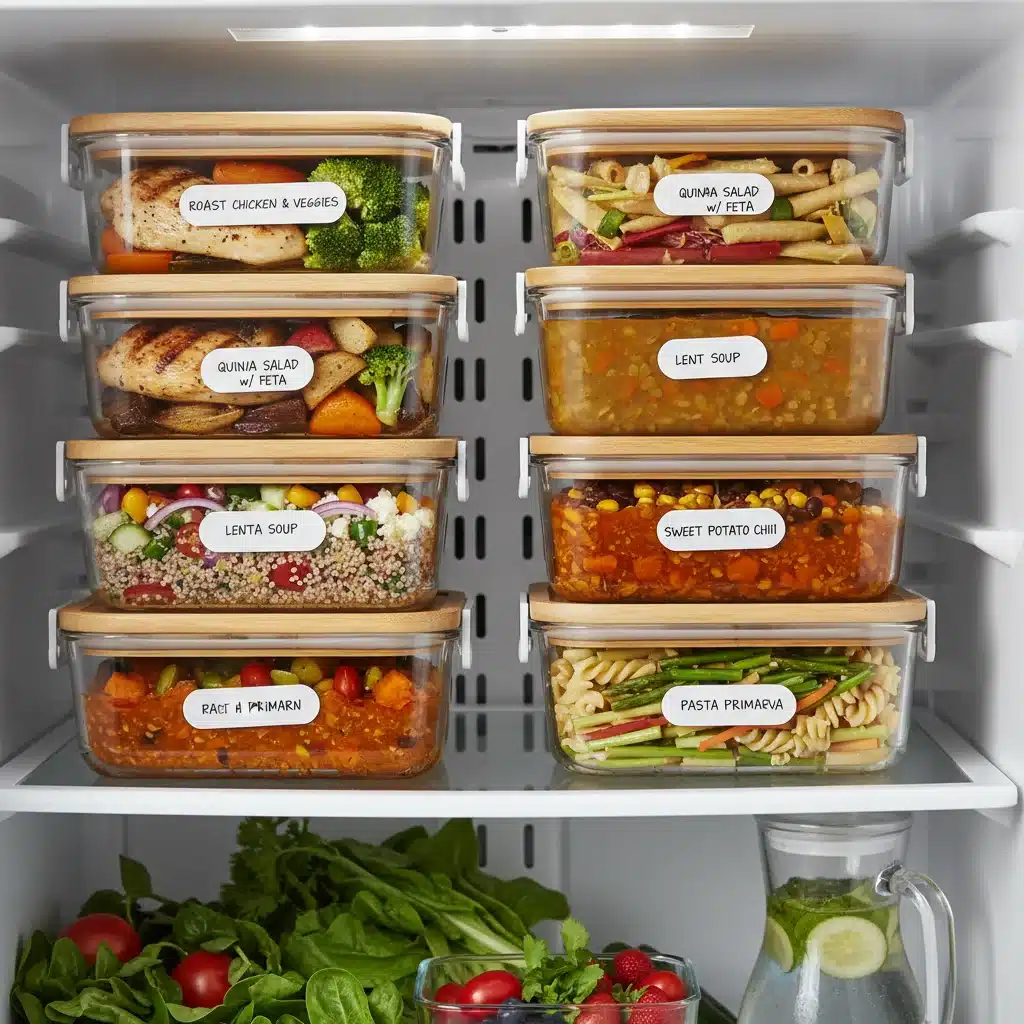
Batch cooking is a cornerstone of efficient meal planning. This involves cooking larger quantities of food than needed for a single meal, with the intention of consuming it over several days or freezing portions for later. This strategy significantly reduces active cooking time during the week.
- Soups and Stews: These are ideal for batch cooking and freezing. Make a huge pot and freeze individual portions.
- Chili and Curries: Often taste even better the next day.
- Casseroles and Lasagnas: Assemble them ahead of time and bake when ready, or bake and then freeze portions.
- Cooked Grains and Legumes: Cook large batches of beans, lentils, rice, or quinoa.
- Freezer-Friendly Meals: Research recipes specifically designed for freezing.
Step 6: Embrace One-Pan and One-Pot Meals
Minimize cleanup and cooking steps with one-pan or one-pot recipes. These are perfect for busy weeknights and align perfectly with efficient meal planning principles.
- Sheet Pan Dinners: Proteins and vegetables roasted together on a single sheet pan.
- Skillet Meals: Everything cooks in one large skillet.
- Slow Cooker/Instant Pot: ‘Set it and forget it’ meals save active cooking time and often yield delicious results.
Phase 3: Advanced Strategies & Sustaining Habits (Months 8-12)
Step 7: The Power of Ingredient Prep (Mise en Place)
French for ‘everything in its place,’ mise en place is a professional chef’s secret weapon. It means having all your ingredients prepped, measured, and ready before you start cooking. While some of this happens during your weekly prep session, adopting this mindset for daily cooking further enhances efficient meal planning.
- Read the Recipe Fully: Understand all steps before you begin.
- Gather All Tools: Pots, pans, utensils – have them ready.
- Measure Everything: Pre-measure spices, liquids, and dry ingredients.
- Chop and Dice: Complete all cutting tasks before turning on the heat.
Step 8: Double Down on Your Favorites
Find 5-7 go-to recipes that you and your family love and that are relatively quick to prepare. Rotate these recipes throughout the month. This reduces decision fatigue and allows you to become incredibly efficient at making them. This is a smart approach to efficient meal planning.
- Familiarity Breeds Speed: The more you make a dish, the faster you become.
- Less Brainpower: No need to learn new techniques or read complex instructions.
- Always Have Ingredients On Hand: Keep staples for these favorite meals stocked.
Step 9: Leverage Leftovers Creatively
Leftovers aren’t just for reheating. They can be the base for entirely new meals, saving significant time. This transformative aspect of efficient meal planning turns yesterday’s dinner into today’s culinary adventure.
- Cooked Chicken: Transform into chicken salad, quesadillas, or a quick stir-fry.
- Roasted Vegetables: Add to omelets, pasta sauces, or grain bowls.
- Cooked Grains: Use as a base for fried rice, salads, or stuffed peppers.
- Soups/Stews: Perfect for lunch the next day.
Phase 4: Refining and Sustaining (Months 13-24)
Step 10: Invest in Time-Saving Appliances
While not strictly necessary, certain kitchen gadgets can significantly enhance your efficient meal planning efforts.
- Instant Pot/Pressure Cooker: Reduces cooking time for grains, stews, and tough cuts of meat.
- Food Processor: Chops, slices, and grates vegetables in seconds.
- Immersion Blender: Quick and easy for pureeing soups directly in the pot.
- Air Fryer: Speeds up crisping and roasting small batches of food.
Step 11: Create a Master Recipe Index
Organize your go-to recipes in a digital or physical format. Include notes on prep time, cooking time, and any variations. This makes meal planning even faster as you can quickly reference proven winners. A well-curated recipe index is invaluable for efficient meal planning.
Step 12: Review and Adapt
Periodically (e.g., quarterly), review your meal planning process. What’s working? What’s not? Are there new recipes or techniques you want to try? The goal is continuous improvement. Efficient meal planning is an evolving process.
- Track Your Time: For a week, roughly track how much time you spend on cooking-related tasks. This helps identify areas for improvement.
- Solicit Feedback: Ask family members what meals they enjoyed and what could be improved.
- Stay Flexible: Life happens. Don’t let a missed prep session derail your entire system. Adapt and get back on track the next week.
Addressing Common Hurdles in Efficient Meal Planning
Hurdle 1: Lack of Motivation
It’s easy to lose steam. Remember your ‘why’ – the extra hour you’ll gain. Reward yourself for sticking to your plan. Start small to build momentum. The initial investment in efficient meal planning pays dividends.
Hurdle 2: Boredom with Repetitive Meals
While some repetition is key for efficiency, you can introduce variety through:
- Seasonality: Incorporate seasonal produce.
- Flavor Profiles: Use different spices and herbs to change the taste of similar ingredients.
- Theme Variations: Instead of ‘Taco Tuesday’ every week, try ‘Burrito Bowl Tuesday’ or ‘Fajita Tuesday.’
Hurdle 3: Unexpected Changes to the Schedule
Build flexibility into your plan. Have a few ’emergency meals’ (frozen pizza, pasta with jarred sauce, quick stir-fry) on standby. Don’t be afraid to swap planned meals around based on your day. Flexibility is a hallmark of truly efficient meal planning.
Hurdle 4: Dietary Restrictions or Preferences
Efficient meal planning can be tailored to any dietary need. Focus on base ingredients (proteins, vegetables, grains) that can be adapted. For example, a stir-fry can be made gluten-free with tamari or vegetarian with tofu.
The Long-Term Benefits of Efficient Meal Planning
Beyond saving an hour of cooking time each week by March 2026, the benefits of mastering efficient meal planning are far-reaching:
- Reduced Food Waste: Planning leads to better utilization of groceries.
- Healthier Eating Habits: You’re less likely to grab unhealthy takeout when nutritious food is ready.
- Budget Savings: Eating out less and utilizing groceries more effectively saves money.
- Less Stress: Knowing what’s for dinner eliminates daily decision-making pressure.
- More Free Time: The ultimate goal – an extra hour every week to spend as you wish.
By consistently applying the principles of efficient meal planning, you’re not just changing how you cook; you’re enhancing your overall quality of life. The journey to saving an hour a week by March 2026 is a marathon, not a sprint, but with each small step, you’ll feel the positive impact on your time, wallet, and well-being.
Conclusion: Your Path to a More Efficient Kitchen
Achieving the goal of shaving an hour off your weekly cooking time by March 2026 is entirely within your grasp. It requires commitment, a structured approach, and a willingness to adapt. Start with the basics: a solid meal plan, a smart grocery list, and a dedicated weekly prep session. Gradually integrate advanced techniques like batch cooking, one-pan meals, and kitchen organization. Embrace the journey, celebrate small victories, and remember that every minute saved in the kitchen is a minute gained for yourself.
Begin your efficient meal planning transformation today. By March 2026, you won’t just be eating well; you’ll be living a more organized, less stressful life, with an extra hour to spare each week. Happy planning, and happy cooking!