Guilt-Free Delights: Satisfying Sweet Cravings with Wholesome Treats
Anúncios
It’s a familiar story: you’ve eaten well all day, sticking to nourishing meals and feeling great. Then, the evening rolls around, and a powerful craving for something sweet hits like a tidal wave. For many, this moment feels like a test of willpower, a battle between discipline and desire where indulging means derailing progress. But what if this entire framework is flawed? What if the desire for sweetness isn’t a weakness to be suppressed, but a natural signal to be answered with something satisfying?
The common approach to this dilemma has been to reach for “diet” or “guilt-free” products, which often trade sugar for artificial ingredients and satisfying textures for a chemical aftertaste. This leaves you feeling deprived and often triggers more intense cravings later. The real solution isn’t about restriction; it’s about redefinition. It involves shifting your perspective to see dessert not as a cheat, but as an opportunity to provide your body with more nourishment through whole-food ingredients that happen to taste incredible.
Anúncios
This guide is your roadmap to that delicious redefinition. We’ll explore the philosophy of wholesome sweetness, breaking down the simple ingredient swaps that transform classic treats into nutritional powerhouses. You’ll discover an array of quick, no-bake recipes perfect for busy weeknights, learn how to harness the natural sweetness of fruit, and master the art of mindful indulgence. Forget guilt—it’s time to embrace desserts that leave you feeling as good as they taste.
Redefining Dessert: The Philosophy of Wholesome Sweetness
Let’s be honest: the idea of “guilt-free” dessert is a trap. It implies that pleasure from food is something to feel bad about, a crime that requires a nutritional pardon. This entire framework is broken. The real goal isn’t to find a less-guilty alternative but to embrace wholesome treats that satisfy your cravings and nourish your body simultaneously. It’s about shifting your mindset from restriction to mindful indulgence.
Anúncios
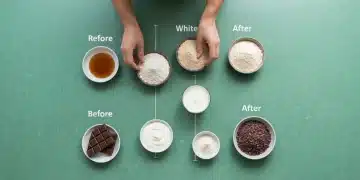
The foundation of this shift lies in the ingredients themselves. Swapping processed white sugar and flour for natural alternatives like dates, maple syrup, oats, and nut flours isn’t a sacrifice; it’s an upgrade. Processed sugar is like a single, loud note on a piano, providing a fleeting spike of sweetness. Natural ingredients, bring a complex chord of flavor, fiber, and micronutrients. Dr. Anya Sharma, a nutritionist and author, states that “the body processes a calorie from an almond-flour brownie very differently from a calorie from a packaged snack cake, impacting everything from blood sugar to satiety.” This is where the magic happens.
This philosophy doesn’t exist in a vacuum, of course. A satisfying dessert feels even better when it follows a day of balanced eating. What most people miss is that a satisfying sweet treat is the perfect capstone to a meal, not a desperate attempt to fill a void left by uninspired healthy main dishes. True balance means enjoying every part of your meal with intention.
Ultimately, these aren’t just copycat versions of classic desserts. They are a new category of healthy dessert recipes that stand on their own delicious merits. Forget the guilt—let’s focus on the goodness.
Smart Swaps: Transforming Classic Sweets into Healthier Versions
Let’s dismantle a myth: a “healthy” brownie is still a brownie. The goal of smart ingredient swaps isn’t to turn dessert into a salad. It’s about making your favorite treats nutritionally smarter and often more flavorful, without sacrificing the joy they bring. This is about upgrading, not depriving.
By simply rethinking the foundational components of a recipe, you can add fiber, vitamins, and healthy fats while reducing empty calories and refined sugars. Think of it less like a diet and more like a kitchen renovation — you’re keeping the structure you love but upgrading the materials. This small shift in perspective is what separates sustainable habits from short-lived health kicks.
Natural Sweeteners vs. Artificial
The sugar aisle is a battlefield of clever marketing. Many so-called “natural” sweeteners are just sugar in a rustic costume. Agave nectar, for instance, is often touted as a healthy alternative, yet some commercial brands contain up to 85% fructose, a higher concentration than high-fructose corn syrup, according to research from the Glycemic Index Foundation. Is that really an improvement?
Your best bet is to look for sweeteners that offer something extra. Consider these swaps:
- Instead of White Sugar: Try maple syrup or raw honey. They contain antioxidants and minerals like manganese and zinc, and their intense flavor means you can often use less.
- Instead of Artificial Sweeteners: Use monk fruit extract or stevia. These are zero-calorie sweeteners derived from plants, which may be a better choice for those managing blood sugar — though the science on their long-term gut health impact is still developing.
The key is understanding that “less processed” often means more nutritional value. A balanced diet isn’t just about one course; it’s about the entire day, starting with a solid foundation like the one found in our guide to quick, healthy main dishes.
Baking with Whole Grains and Nut Flours
All-purpose white flour is the definition of a blank slate. It’s been stripped of its bran and germ, leaving behind a fine powder with almost no fiber or nutrients. It gets the job done, but it brings nothing interesting to the party. It’s time to demand more from your flour.
Swapping out even half of the white flour in a recipe can dramatically boost its nutritional profile. Almond flour adds moisture and a dose of healthy fats, while whole wheat flour provides a nutty, complex flavor and a significant fiber increase. The underrated factor here is texture — oat flour can give cookies a wonderfully chewy consistency you just can’t get from its all-purpose cousin.
Here’s a quick comparison:
- All-Purpose Flour: Low in fiber (about 1g per 1/4 cup), minimal protein, and stripped of most nutrients. It provides structure but little else.
- Almond Flour: A great source of protein (6g per 1/4 cup) and healthy monounsaturated fats. It creates a tender, moist crumb, perfect for cakes and muffins.
- Whole Wheat Flour: High in fiber (around 4g per 1/4 cup) and retains B vitamins and iron. It lends a hearty, rustic quality to baked goods.
Experimenting with these swaps is where the fun begins. You can start by trying one of our tested healthy dessert recipes for every craving to see how these ingredients work in practice. The next step is applying these principles to your own family-favorite recipes.
The fat molecules in avocado emulsify beautifully with liquids when blended at high speed, creating a stable, airy structure without any dairy or eggs.
— Dr. Amelia Vance, Food Scientist and Nutritionist
| Classic Ingredient | Healthier Swap | Why It’s Better |
|---|---|---|
| White Sugar | Maple Syrup or Date Paste | Provides trace minerals, antioxidants, and fiber instead of empty calories. |
| All-Purpose Flour | Almond or Oat Flour | Adds protein, healthy fats, and fiber, which helps stabilize blood sugar. |
| Heavy Cream | Avocado or Greek Yogurt | Offers healthy monounsaturated fats or a significant boost of protein. |
| Milk Chocolate | Dark Chocolate (70%+) or Cacao Powder | Contains more antioxidants and less sugar, supporting heart health. |
Quick & Easy: No-Bake Healthy Sweet Treats for Busy Lives
After crafting a nutritious main course, the desire for something sweet often strikes. But who has the time or energy to bake a complex dessert on a busy weeknight? The common belief is that healthy desserts require hours of prep and obscure ingredients. This is a myth.
The solution lies in no-bake treats that come together in minutes, not hours. These recipes use simple, wholesome ingredients and rely on a refrigerator or freezer to do the heavy lifting. A study from Cambridge University found that individuals who spend less than an hour per day on food preparation are significantly more likely to rely on processed, high-sugar snacks. Having quick, healthy options on hand is a powerful strategy for better eating habits. Think of it less like professional baking and more like a quick, healthy assembly project.
You can enjoy a satisfying dessert without ever turning on your oven.
Energy Balls & Bites
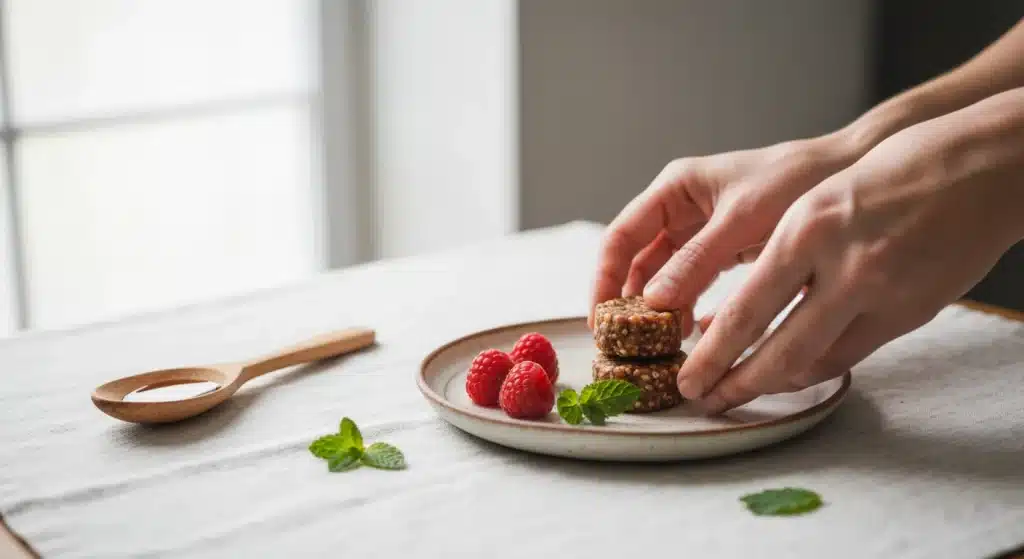
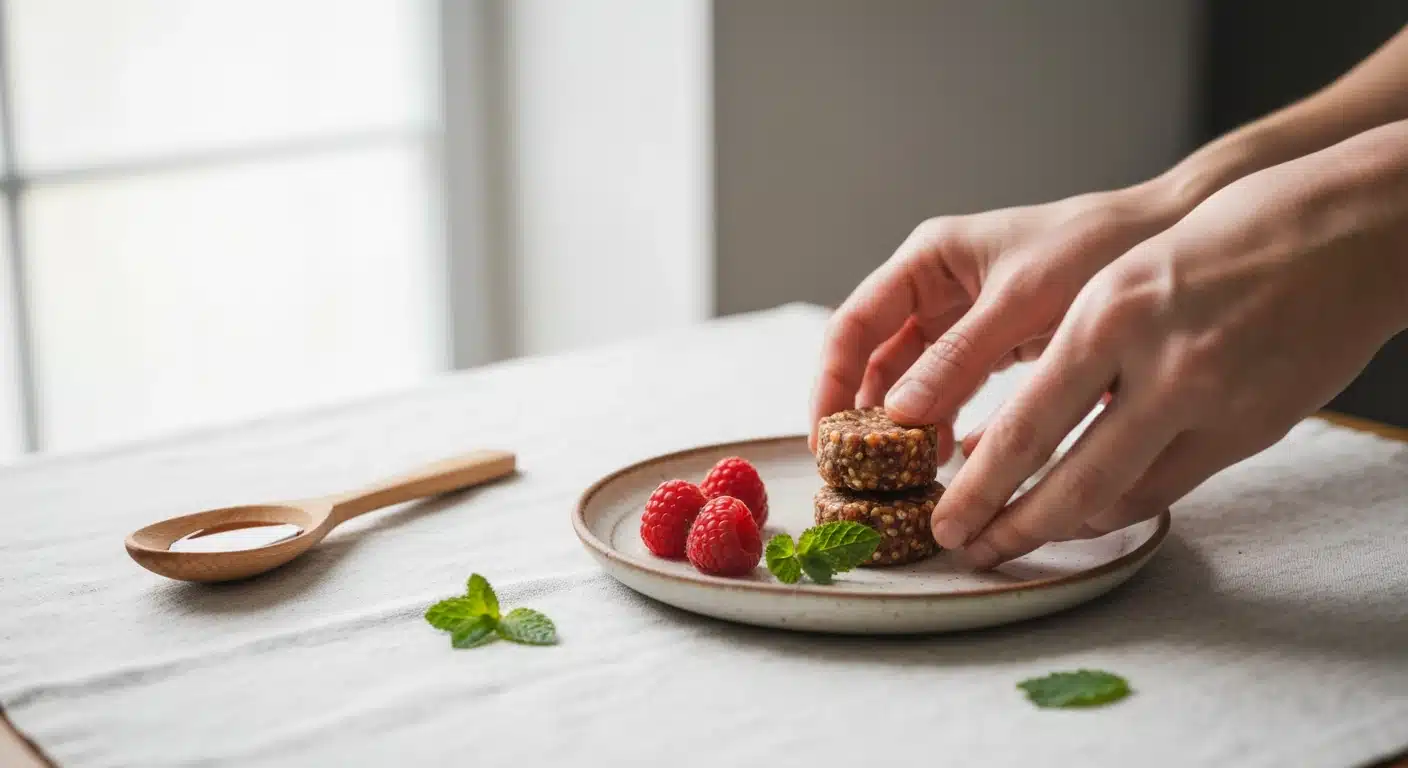
Energy balls are the ultimate express treat, requiring little more than a food processor and a few pantry staples. They are endlessly customizable and perfect for a post-dinner sweet or a midday energy boost. The basic formula involves a sticky binder, a dry base, and flavor-enhancing mix-ins. What most people miss is that the texture can be easily adjusted by adding a teaspoon of water for a smoother consistency or more oats for a firmer bite.
For a classic combination, try this simple recipe:
- Base: Combine 1 cup of rolled oats, 1/2 cup of pitted dates (soaked in warm water for 10 minutes if dry), and 1/4 cup of natural peanut or almond butter in a food processor.
- Flavor: Add 2 tablespoons of unsweetened cocoa powder, 1 tablespoon of chia seeds, and a pinch of salt.
- Process: Pulse until the mixture comes together and can be easily rolled. If it’s too dry, add a teaspoon of water; if too wet, add more oats.
- Finish: Roll into bite-sized balls and refrigerate for at least 15 minutes to firm up. They can be stored in an airtight container in the fridge for up to a week.
This entire process takes less than 10 minutes of active time, making it a faster choice than a trip to the corner store for a candy bar. It’s a small time investment that pays off all week long, much like planning for healthy main dishes in under 30 minutes ensures you’re never caught without a good dinner option.
Layered Yogurt Parfaits
A yogurt parfait is visual, satisfying, and takes mere minutes to assemble. The key is to use high-quality ingredients to create distinct layers of flavor and texture. Start with a base of plain Greek yogurt, which provides a significant protein punch—often upwards of 17 grams per serving—that helps promote satiety and curb further cravings. It’s a simple dessert that feels luxurious.
Building the perfect parfait is all about the layers. In a clear glass or jar, alternate spoonfuls of Greek yogurt with fresh berries (like raspberries or blueberries) and a sprinkle of low-sugar granola or crushed nuts for crunch. For a richer flavor, you can add a drizzle of honey or maple syrup. This method not only looks appealing but also ensures you get a mix of creamy, tart, and crunchy in every single spoonful. This simple concept is part of a larger strategy for creating fulfilling meals quickly, a topic explored in our guide to speedy and wholesome main dishes.
Chocolate Avocado Mousse
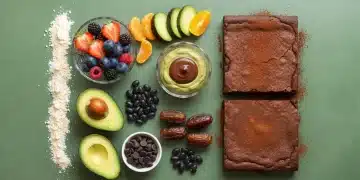
Avocado in a dessert? It sounds strange, but the creaminess and healthy fats of a perfectly ripe avocado make it an ideal base for a decadent-tasting mousse. The avocado’s mild flavor is completely masked by the rich cocoa, resulting in a velvety smooth dessert that is packed with nutrients like potassium and fiber. Surprisingly, the texture is often smoother than that of traditional mousses made with heavy cream and eggs.
To make it, simply blend one large, ripe avocado with 1/4 cup of unsweetened cocoa powder, 3-4 tablespoons of a liquid sweetener like maple syrup, and a splash of almond milk until perfectly smooth. This is just one of many surprising healthy dessert recipes that can satisfy any sweet tooth. The result is a rich, chocolatey treat that’s ready in under five minutes—and yes, it tastes like a dessert, not a salad.
Tips for Perfect Mousse Texture
Achieving that signature silky mousse texture is easy with a few simple tricks. The most critical factor is the ripeness of your avocado; it should be soft enough to yield to gentle pressure, similar to a ripe peach. An underripe avocado will result in a grassy taste and lumpy texture, while an overripe one can be stringy.
Dr. Amelia Vance, a food scientist and nutritionist, explains, “The fat molecules in avocado emulsify beautifully with liquids when blended at high speed, creating a stable, airy structure without any dairy or eggs.” For best results, use a high-speed blender rather than a food processor and scrape down the sides several times. Chilling the mousse for at least 30 minutes before serving allows the flavors to meld and the texture to set, transforming it from a thick smoothie into a true mousse.
Fruity Fantasies: Embracing Nature’s Candy
Let’s be honest: you probably think fruit is a boring dessert. It’s the consolation prize you eat when you’re “being good.” This mindset completely misses the point of nature’s most versatile sweet. Fruit isn’t just a health food; it’s a dynamic ingredient waiting to be transformed into something spectacular. It’s time to stop treating it like a dietary obligation.
The debate between fresh and frozen fruit often paralyzes home cooks, but the underrated factor here is purpose. Are you seeking the crisp, structural integrity of a fresh Honeycrisp apple or the creamy convenience of a frozen banana? According to data from the FDA, frozen fruits are picked at peak ripeness and flash-frozen, often retaining a higher nutrient profile than fresh fruits that have traveled thousands of miles. It’s like comparing a live concert to a studio album—both are excellent, just for different occasions.
Consider the trade-offs:
- Fresh Fruit Pros: Superior texture for raw applications, vibrant appearance, and seasonal variety.
- Fresh Fruit Cons: Shorter shelf life, higher cost out-of-season, and variable ripeness.
- Frozen Fruit Pros: Available year-round, budget-friendly, and perfect for blending into smoothies or “nice” creams.
- Frozen Fruit Cons: Can become mushy upon thawing, making it unsuitable for dishes where texture is key.
Baked Fruit Delights
Applying heat to fruit fundamentally alters its character by concentrating its sugars and softening its texture. Baking an apple or pear with a sprinkle of cinnamon does more than just warm it up; it deepens the flavor into something rich and caramel-like. This simple process requires almost no skill, unlike some intricate 30-minute main dishes that demand your full attention.
Try this simple method. Halve a peach or a pear, remove the pit, and fill the cavity with a teaspoon of rolled oats and a drizzle of maple syrup. Bake at 375°F (190°C) for 20-25 minutes until tender and bubbling. The result is a warm, gooey dessert that feels indulgent but is built entirely on wholesome ingredients. It’s one of the most basic but rewarding healthy dessert recipes you can master.
Refreshing Frozen Fruit Treats
On the opposite end of the spectrum are frozen fruit creations, the ultimate answer to an immediate sweet craving. The most popular example is “nice cream.” Simply blend frozen bananas—ideally very ripe ones frozen in chunks—until they achieve a texture shockingly similar to soft-serve ice cream. From there, you can add anything from cocoa powder to frozen strawberries or a spoonful of peanut butter.
But don’t stop there. Have you ever tried frozen grapes? They taste surprisingly like tiny, bite-sized sorbet balls. Another idea is to blend a mix of frozen mango, pineapple, and a splash of coconut water for an instant tropical sorbet that contains zero added sugar. These treats require no pre-planning (as long as your freezer is stocked) and deliver pure, unadulterated flavor without the guilt.
The versatility is astounding. What most people miss is that the freezer is not where fruit goes to die; it’s where it waits for its second act. The challenge isn’t finding a way to use fruit, but choosing which delicious path to take first.
Mindful Indulgence: Portion Control and Enjoyment
Just because a dessert is made with wholesome ingredients doesn’t grant a free pass to eat the entire batch. The “health halo” effect is a real psychological trap; labeling something as healthy can, surprisingly, lead to greater consumption. We rationalize that extra serving of black bean brownies because, well, they’re made with beans. This thinking completely undermines the effort of choosing a better-for-you treat in the first place.
The solution isn’t stricter rules, but greater awareness. This is the core of mindful eating. Ask yourself: when was the last time you tasted every single bite of a dessert without distraction? Mindful indulgence means putting away your phone, stepping away from the television, and focusing solely on the experience of eating. You notice the rich texture of an avocado mousse or the bright tang of a lemon-cashew bar. It’s about quality of experience, not quantity of food.
Practical portion control begins before the first bite. A study published in the American Journal of Clinical Nutrition found that participants served themselves over 30% more when given larger bowls and spoons. Use smaller dishes for your desserts. When you bake a batch of cookies, immediately store them in single-serving containers or bags — a little prep that prevents mindless grazing later. The container often dictates the portion.
A balanced approach to sweets is like managing a budget; it’s the overall pattern, not a single transaction, that matters. Enjoying one of our healthy dessert recipes feels more satisfying when it complements a day of nourishing meals. The real strategy is integrating treats into a plan that includes quick, healthy main dishes throughout the week. This creates a sustainable lifestyle where no food is forbidden, just balanced. The underrated factor here is that a satisfying, protein-rich dinner can often reduce the urge to overdo it on dessert later.
Ultimately, treating dessert with this kind of respect transforms it from a source of guilt into a genuine, joyful part of your life. You end up getting maximum satisfaction from a smaller amount, breaking the cycle of restriction and overconsumption for good.
Beyond the Recipe: A New Relationship with Sweetness
The recipes and ingredient swaps in this guide are more than just instructions; they are tools for building a new relationship with your cravings. Moving forward, the challenge isn’t to memorize every healthy alternative but to cultivate curiosity in the kitchen. Instead of asking, “What can’t I have?” start asking, “How can I create what I want with ingredients that serve my body?” This small shift in perspective transforms cooking from a set of restrictive rules into a creative and empowering act.
Your next step is simple: pick one idea that sparked your interest—perhaps the avocado mousse or the simple baked peaches—and make it this week. Don’t frame it as a dietary obligation, but as an experiment in pleasure and nourishment. By consistently choosing to answer your body’s call for sweetness with wholesome, delicious options, you’re not just eating healthier; you’re fundamentally changing the conversation around food from one of guilt to one of joyful, mindful indulgence.
Frequently Asked Questions
Are healthy sweet treats satisfying?
Yes, absolutely. True satisfaction comes from both flavor and satiety. Healthy treats made with whole foods like nuts, oats, and fruits provide fiber and healthy fats, which help you feel full and prevent the blood sugar crash that often follows processed sweets, leading to a more lasting sense of contentment.
What are the best natural sugar alternatives for baking?
Maple syrup, date paste, and raw honey are fantastic choices as they contribute moisture, complex flavor, and trace nutrients. For zero-calorie options, monk fruit extract and stevia are effective plant-based sweeteners, though they work best when combined with other ingredients to balance their unique taste.
Can I freeze healthy desserts for later consumption?
Definitely. Many healthy treats are perfect for freezing. Energy balls, no-bake bars, black bean brownies, and muffins made with nut flours all freeze exceptionally well. This is an excellent strategy for portion control and ensuring you always have a wholesome option on hand when a craving strikes.
How do I prevent my healthy treats from tasting bland?
The key is to build layers of flavor. Use high-quality vanilla extract, spices like cinnamon and nutmeg, and a pinch of sea salt to enhance sweetness. Ingredients like toasted nuts, espresso powder in chocolate recipes, and citrus zest can also add incredible depth and complexity, ensuring your treats are anything but boring.
What’s the difference between ‘healthy’ and ‘diet’ desserts?
A ‘healthy’ dessert focuses on nutrient density, using whole-food ingredients that provide vitamins, fiber, and healthy fats. A ‘diet’ dessert typically prioritizes being low-calorie or low-sugar, often relying on artificial sweeteners and processed fillers that offer little to no nutritional benefit.