Unmasking Common Pitfalls in Healthy Eating: Avoid These Quick Meal Mistakes
Anúncios
You follow the rules, buy the ‘healthy’ foods, and even dedicate your Sunday to meal prepping. Yet, despite your best efforts, the scale doesn’t budge, you feel sluggish, and the promise of vibrant health seems like a distant dream. This frustrating cycle is incredibly common, leading many to believe that healthy eating is either too complicated, too expensive, or simply not for them. The truth, is often simpler and more insidious: your good intentions are being sabotaged by hidden pitfalls disguised as convenience.
It’s not a failure of willpower. The modern food environment is a minefield of nutritional traps. Clever marketing uses buzzwords like ‘all-natural’ and ‘low-fat’ to mask high levels of sugar, sodium, and processed fillers. Our own habits, from the way we prep our food to the way we eat it, can inadvertently strip nutrients and encourage overconsumption. We’re conditioned to seek the quickest path, but these shortcuts often lead us directly away from our health goals.
Anúncios
Is it possible to make quick meals that are genuinely healthy without falling into these common traps? Absolutely. This guide will unmask the most frequent mistakes people make when trying to eat well under pressure. We’ll decode misleading food labels, reveal how to make meal prep work without the boredom and waste, and identify the simple lifestyle habits that can make or break your success. It’s time to stop fighting a losing battle and start making strategic switches that deliver real, sustainable results.
The Allure of ‘Quick’ and Its Hidden Traps
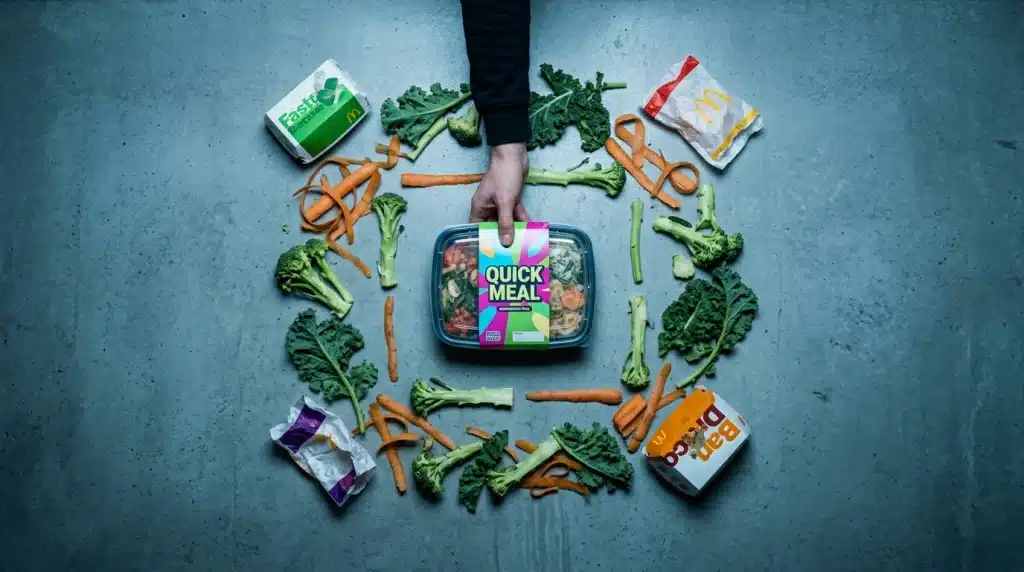
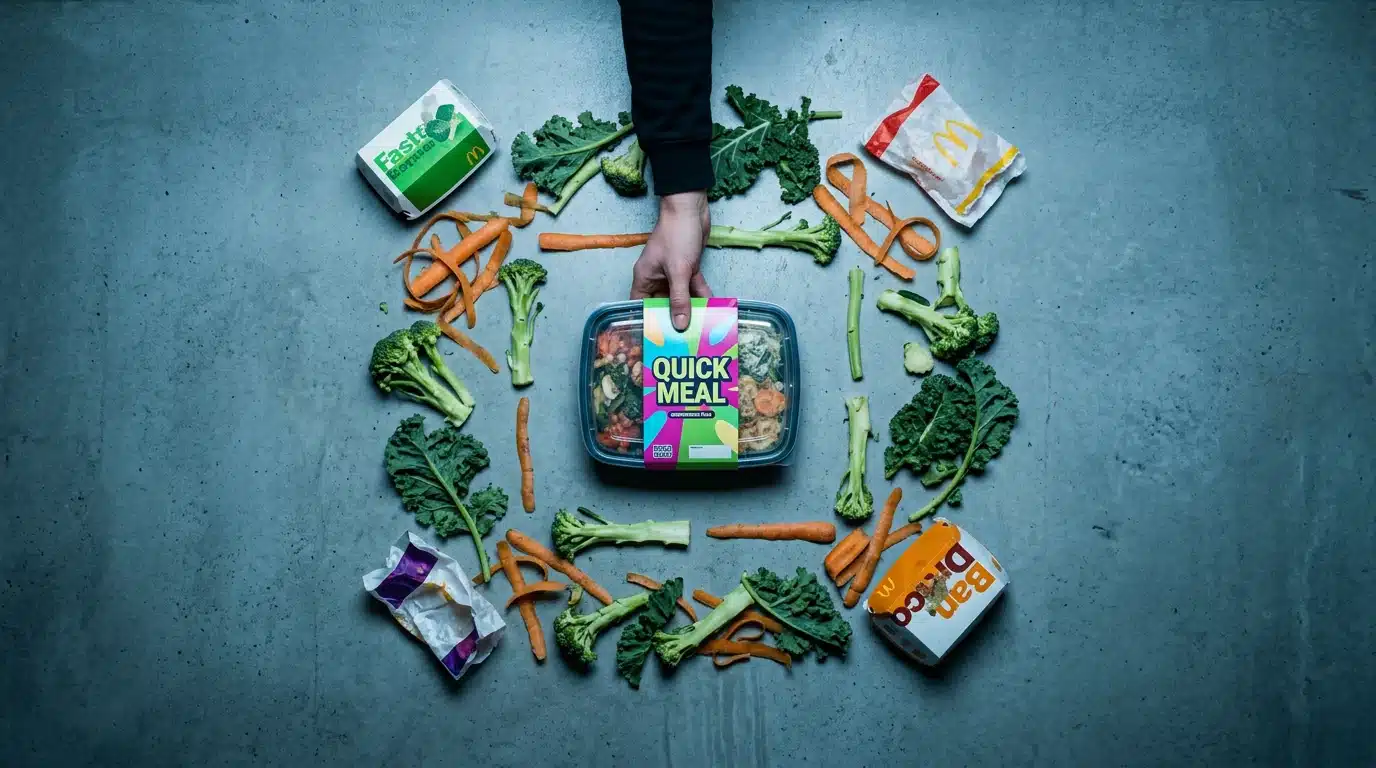
The promise of a ‘quick meal’ is one of modern life’s most seductive lies. We’re conditioned to believe that fast equals efficient, and that a meal prepared in under 15 minutes is a victory against a packed schedule. This thinking, often leads us directly into nutritional traps disguised as convenience. We trade long-term health for short-term relief. It’s a bad deal.
Anúncios
Our brains are hardwired to choose the path of least resistance, and the food industry exploits this beautifully. The psychological draw of convenience is immense — a trick our brains play on us constantly — making us reach for the pre-packaged, the processed, and the drive-thru. According to data from the Centers for Disease Control and Prevention, more than one-third of American adults consume fast food on any given day. This isn’t a failure of willpower; it’s a predictable response to a system designed for speed over substance, a system that often sidesteps any holistic guide to healthy eating habits.
The underrated factor here is that convenience often creates more problems than it solves.
What most people miss is how these seemingly harmless choices compound over time, much like taking a supposed shortcut that lands you in bumper-to-bumper traffic. But is that grab-and-go meal supporting your well-being? Knowing the expert strategies for healthy, delicious, and efficient main dishes is the first step toward breaking this cycle. The real challenge is unmasking the common mistakes we make when the clock is ticking and hunger strikes, which is precisely where our journey begins.
Navigating Nutritional Shortcuts: What to Watch Out For
Let’s be honest: you’ve been duped. That “all-natural” frozen meal or “heart-healthy” canned soup you grabbed for a quick dinner is likely a nutritional Trojan horse. Food manufacturers are masters of disguise, using clever packaging and health buzzwords to mask what’s really inside. The convenience is appealing, but the trade-off is often a cocktail of ingredients your body doesn’t need.
It’s a trap set by marketing. You’re not just eating food; you’re consuming a story sold to you on a colorful box.
Decoding Labels: Beyond the ‘Healthy’ Claims
The front of the package is pure advertising, but the back tells the truth. Ignore the flashy claims of “low-fat” or “made with whole grains” and go straight to the nutrition facts panel and ingredients list. What you often find is a litany of processed components, from modified corn starch to various gums and flavor enhancers. A holistic approach to healthy eating involves recognizing food, not just food-like products.
Think of it like checking a car’s service history before buying it; you want to know what’s actually under the hood, not just admire the paint job. A classic example is a pre-made “healthy” wrap. It might boast of lean turkey and vegetables, but the tortilla itself can be loaded with hydrogenated oils and preservatives designed for an unnaturally long shelf life. The ingredient list should be short and contain items you can actually picture in their natural state.
The Sodium and Sugar Sneak Attack
When manufacturers remove fat to slap a “low-fat” label on a product, they have to add something back for flavor. Their weapons of choice are almost always sodium and sugar. According to analysis from the American Heart Association, a single serving of some canned soups can contain over 75% of the recommended daily sodium intake. Why is no one talking about this?
These hidden additions are everywhere. That seemingly innocent yogurt parfait is often a sugar bomb, and the bottled vinaigrette you pour over your salad can have more sugar per serving than a cookie — a fact that makes crafting your own health-conscious treats and dressings even more important. This is the real pitfall of convenience foods: they hijack your palate and your health goals simultaneously.
Here’s a direct comparison of what you think you’re getting versus a genuinely healthy alternative:
| ‘Healthy’ Quick Meal Component | Healthy Alternative |
|---|---|
| Store-Bought Salad Dressing (High in sugar, sodium, vegetable oils) | Homemade Vinaigrette (Olive oil, vinegar, herbs; 3 ingredients) |
| Flavored Instant Oatmeal Packet (Packed with added sugars and artificial flavors) | Rolled Oats (Cooked with water/milk, topped with fresh fruit and nuts) |
| Frozen ‘Lean’ Dinner Entree (Often over 800mg sodium, preservative-filled sauces) | Meal-Prepped Chicken & Veggies (Controlled sodium, fresh ingredients) |
The difference isn’t just about calories; it’s about nutrient density and avoiding the processed fillers that sabotage your efforts. Gaining control over these simple swaps is the first step toward making your quick meals genuinely beneficial, a core principle in achieving speedy and sustainable sustenance. The next time you’re in a hurry, ask yourself if the shortcut is leading you to the right destination.
We’ve become accustomed to visual abundance, where a full plate signals value, regardless of caloric density.
— Dr. Chloe Henderson, Nutritionist and Author
| Common Mistake | Smarter Switch |
|---|---|
| Trusting ‘Healthy’ Labels on Packaging | Reading the Ingredients List for Hidden Sugars & Sodium |
| Prepping Identical Meals for the Week | Prepping Versatile Components (Grains, Proteins, Veggies) |
| Eating While Distracted by Screens | Practicing Mindful Eating to Recognize Fullness Cues |
| Using Large, Restaurant-Style Plates | Switching to Smaller Plates to Naturally Control Portions |
| Stocking a Pantry with Processed Foods | Upgrading the Pantry with Whole Food Staples and Spices |
Meal Prep Mishaps: When Good Intentions Go Wrong
You’ve been told that Sunday meal prep is the key to a week of healthy eating. This is a half-truth. For many, that container of perfectly portioned chicken and broccoli becomes a symbol of failure by Wednesday, destined for the trash. The reality is that much of what passes for meal prep advice sets you up for food waste, flavor boredom, and nutritional disappointment.
Your meticulous planning can easily backfire. What starts as a virtuous effort to control your diet often devolves into a cycle of guilt and wasted money. Let’s dismantle the common ways your good intentions are sabotaging your results.
Over-Prepping and the Food Waste Dilemma
The sheer ambition of prepping seven identical meals is your first mistake. A report from the Food and Drug Administration suggests that American households waste an average of 31.9% of their food, a figure that meal preppers can ironically contribute to. You cook a mountain of food with enthusiasm, but by Thursday, the thought of another bite is unbearable. That’s when your prepped meal gets shoved to the back of the fridge.
The problem is a core miscalculation of human psychology. We crave variety. Planning for five or seven days of the exact same lunch is like programming a robot, not feeding a person. What most people miss is the flexibility factor; life happens, a friend asks you to lunch, or you simply aren’t in the mood for what you’ve made. Suddenly, your “efficient” system creates more waste than it prevents.
The Blandness Barrier: Avoiding Flavor Fatigue
Eating the same meal repeatedly doesn’t just get boring; it can trigger a psychological backlash against your healthy eating goals. This is flavor fatigue. Your brain, wired to seek out diverse nutrients, starts to protest the monotony. This protest often comes in the form of intense cravings for the very junk food you’re trying to avoid.
Think of it like a radio station stuck on one song. At first, it’s fine, but soon it becomes maddening. Instead of prepping identical meals, try prepping components. Cook a batch of quinoa, roast a tray of mixed vegetables, and grill some chicken or tofu. Now you have the building blocks for bowls, salads, or wraps. This approach allows for daily variation without requiring a full cooking session each night. You can find inspiration for mixing and matching ingredients in our guide to unlocking flavorful and fast healthy meals.
This simple shift turns your fridge from a museum of identical Tupperware into a flexible arsenal for crafting deliciously quick main dishes. You maintain control while killing the boredom.
Preserving Nutrients: Cooking and Storage Tips
Here’s the uncomfortable truth: the way you cook and reheat your prepped meals might be stripping them of the very nutrients you’re eating them for. Certain vitamins, particularly water-soluble ones like Vitamin C and B vitamins, are notoriously sensitive to heat and oxygen. For example, research in the Journal of Agricultural and Food Chemistry has shown that microwaving broccoli can destroy up to 97% of its beneficial flavonoids.
Are you really getting the benefits you worked so hard to prepare? Your reheated meal might just be a shadow of its former nutritional self. To combat this, you need a smarter strategy—one that focuses on nutrient preservation from the start.
Follow these guidelines to keep your meals as nutritious as possible:
- Cook Gently: Opt for steaming, light sautéing, or baking over boiling or high-heat frying. These methods help retain more of the food’s original vitamin and mineral content.
- Store Airtight: Oxygen is the enemy of freshness and nutrients. Use glass airtight containers to minimize exposure. Vacuum-sealing is even better if you’re serious about preservation.
- Reheat with Care: Avoid the microwave when possible. Gently reheating food on the stovetop or in a toaster oven is a superior method for preserving both texture and nutritional value.
- Prep Smart, Not Hard: Don’t cook everything completely. For example, you can blanch vegetables so they just need a quick sauté before eating. This ensures they are as fresh and nutrient-dense as possible when you consume them. This is a core tenet of any holistic guide to healthy eating habits.
Rethinking your prep process isn’t about making it more complicated. It’s about making it more effective, ensuring the food you eat is actually delivering the health benefits you expect.
Beyond the Plate: Lifestyle Habits Undermining Quick Healthy Meals
You’ve prepped the perfect 15-minute salmon and asparagus, but your health goals are still stalling. The problem probably isn’t the food itself. What most people miss is that the environment and habits surrounding your quick meal can completely dismantle your best efforts. It’s the silent sabotage happening between bites.
Poor hydration is a classic culprit. The sensation of thirst is often mistaken for hunger, leading to unnecessary snacking on what should have been a satisfying meal. Think of your body like a car engine; running it without enough coolant leads to all sorts of performance issues. The same goes for water.
The Trap of Distracted Eating
That healthy meal you spent time preparing deserves your full attention. Yet, most of us eat with our eyes glued to a screen. A study from the Cornell Food and Brand Lab revealed that distracted individuals can consume significantly more calories without even realizing it. You’re essentially eating on autopilot and completely missing your body’s satiety signals — the natural “I’m full” message.
This habit turns your meal into background noise. Are you actually tasting the spices in your food, or just mechanically moving a fork to your mouth while watching a video? This mindless consumption is a massive pitfall, creating a disconnect that leaves you feeling unsatisfied and often reaching for more food soon after. This is where even a guide to unlocking flavorful and fast healthy meals can fall short if the eating habit itself is broken.
Your brain needs to register the meal to feel content. Without that focus, the door is left wide open for unhealthy snacking an hour later, undoing the benefits of your quick, nutrient-dense dinner. Suddenly, those healthy sweet treats you planned for the weekend are being raided on a Tuesday night.
Portion Distortion: More Than You Think
You believe you’re eating a reasonable amount, but restaurant-sized plates and cultural norms have warped our perception of a proper serving. A standard serving of pasta, for example, is about one cup cooked, yet many people routinely serve themselves two or even three times that amount. It’s a classic case of your eyes being bigger than your stomach’s actual needs.
This isn’t about extreme restriction. It’s about recalibration.
Dr. Chloe Henderson, a nutritionist and author, explains, “We’ve become accustomed to visual abundance, where a full plate signals value, regardless of caloric density.” She advises using smaller plates and measuring cups for a week to retrain your brain on what a healthy portion looks like. This simple adjustment can lead to a caloric deficit of 15-20% without changing the food itself — a powerful strategy for anyone trying to implement holistic healthy eating habits.
The solution lies not just in what you cook, but in how you serve and consume it. Paying attention to these external factors is the difference between a meal that works for you and one that inadvertently works against you.
Smart Switches: Turning Mistakes into Momentum for Healthy Eating
So, you’ve hit a few bumps on the road to healthy eating. The cycle of guilt and resignation is exhausting, but breaking it isn’t about finding more willpower. The real problem is your system is set up for failure. It’s time to stop blaming yourself and start outsmarting the common traps with strategic, almost deceptively simple, changes.
Reimagining Your Pantry for Quick Health
Your pantry is either a launchpad for success or a minefield of dietary disasters. Let’s be brutally honest: if your shelves are stocked with high-sodium canned soups, sugary sauces, and refined white pasta, you’re going to eat them when you’re tired and hungry. The change begins before you even think about cooking. A study published in Cell Metabolism revealed a shocking truth: participants on an ultra-processed diet consumed an average of 508 more calories per day than those eating whole foods. Your environment dictates your actions.
The fix is a systematic purge and replacement—not all at once, but one swap at a time. This isn’t about deprivation; it’s about upgrading. Think of it as transforming everyday ingredients into a healthier version of themselves. Here are some non-negotiable smart switches:
- Instead of creamy bottled dressings, use a mix of olive oil, lemon juice, and a pinch of salt. Or, for a creamy texture, blend Greek yogurt with fresh herbs.
- Instead of instant ramen packets, use whole-wheat spaghetti or soba noodles with low-sodium broth and frozen vegetables. It takes just three extra minutes.
- Instead of sugary breakfast cereals, switch to rolled oats or plain Greek yogurt with berries. This single change demolishes a morning sugar spike.
- Instead of jarred pasta sauce (often loaded with sugar and salt), keep canned crushed tomatoes on hand. Sauté with garlic and herbs for a fresh-tasting sauce in minutes.
Creative Combinations for Flavor and Nutrition
Healthy and quick are not mutually exclusive terms. You just need a better playbook. Forget complicated recipes with a dozen steps. The secret lies in a “plug-and-play” approach using pre-prepped or fast-cooking components. Your goal is a balanced plate: a lean protein, a complex carb, and a pile of vegetables.
Here are a few combinations that take less than 15 minutes to assemble:
- Speedy Salmon Bowl: Place a salmon fillet on a baking sheet, season, and bake at 400°F (200°C) for 12-15 minutes. While it cooks, microwave a pouch of pre-cooked quinoa and toss a bag of mixed greens with vinaigrette. Combine in a bowl.
- Deconstructed Burrito Plate: Open and rinse a can of black beans. Reheat them with some frozen corn and chili powder. Serve alongside sliced avocado, salsa, and a scoop of plain Greek yogurt (a fantastic sour cream substitute).
- 10-Minute Chickpea & Spinach Sauté: Sauté a minced garlic clove in olive oil for 30 seconds. Add a can of chickpeas and a few giant handfuls of fresh spinach. Cook until the spinach wilts, then squeeze half a lemon over it. It’s shockingly filling.
These aren’t just recipes; they are templates. Swap the salmon for chicken, the quinoa for brown rice, or the chickpeas for lentils. The core principle of these quick and healthy main dishes is flexibility.
Beyond the Recipe: A Mindset Shift
The most significant mistake people make is believing that healthy eating is a pass/fail exam. This “all-or-nothing” thinking is what leads to burnout. You eat a slice of pizza on Friday, so you declare the entire weekend a “cheat” and promise to “start over” on Monday. This is a psychological trap, not a nutritional strategy.
Dr. Anya Sharma, a behavioral nutritionist, suggests the problem is perfectionism. “We treat a single unhealthy meal like a total system failure,” she explains, “when it’s really just a single data point. It’s like getting one flat tire and deciding to scrap the whole car instead of just changing the tire.” What if one “off” meal meant nothing more than it was just one meal?
Embracing Imperfection in Healthy Eating
The most sustainable approach is the 80/20 rule: you focus on making nutritious choices 80% of the time, leaving 20% for flexibility. This allows for social events, cravings, and life’s general unpredictability without derailing your entire effort. It builds resilience, not rigidity. That 20% isn’t a failure; it’s a feature.
This means you can—and should—plan for enjoyment. Knowing how to prepare satisfying yet delightful healthy treats prevents the feeling of deprivation that leads to bingeing. The underrated factor here is that consistency over time will always beat short-term, unsustainable perfection. Stop aiming for a perfect week and start aiming for a pretty good month.
From Knowledge to Action: Your Next Meal
Understanding these pitfalls is the critical first step, but the real transformation happens on your next plate. Instead of striving for an immediate, perfect overhaul of your diet, what if you focused on making just one smarter switch today? Perhaps it’s choosing to make your own salad dressing, putting your phone away during lunch, or using a smaller plate for dinner. The goal isn’t flawlessness; it’s momentum. Which single, simple change will you commit to for your very next meal?
Frequently Asked Questions
What are the most common hidden ingredients to watch out for in ‘healthy’ quick meals?
The most common culprits are added sugars (often disguised as dextrose or corn syrup), excessive sodium, and refined industrial seed oils like soybean or canola oil. Always check the ingredients list on sauces, dressings, and frozen entrees; if it’s long and full of words you can’t pronounce, it’s best to avoid it.
How can I prevent food waste when trying to meal prep for quick healthy dinners?
Instead of prepping five identical meals, try prepping versatile components. Cook a batch of quinoa, roast a tray of mixed vegetables, and grill some chicken or tofu. This ‘building block’ approach allows you to assemble different bowls, salads, or wraps throughout the week, preventing flavor fatigue and ensuring you eat what you’ve cooked.
Is it always better to cook from scratch, or can some convenience foods be part of a healthy quick meal plan?
While scratch cooking offers the most control, select convenience foods can be healthy. Look for items that are essentially single ingredients, such as canned beans (rinsed to remove sodium), plain frozen vegetables, or pre-cooked brown rice with no added sauces. These can be excellent time-savers without compromising your health goals.
What are some quick and easy ways to boost the nutritional value of a simple main dish?
You can easily enhance a dish by adding a handful of spinach to a soup or pasta, sprinkling nutrient-dense seeds like chia or flax on top, or using fresh herbs for flavor instead of salt. A simple squeeze of lemon or lime can also add a boost of vitamin C and brighten the entire meal.
How do I maintain portion control when I’m in a hurry and just want a quick bite?
Use smaller plates and bowls, as this simple trick can help you feel satisfied with less food. Before eating, drink a full glass of water, as our brains often mistake thirst for hunger. If you can, pre-portion snacks into small bags or containers ahead of time to make grab-and-go portion control automatic.