Future-Proof Your Weeknights: Emerging Trends in Healthy Meal Prep
Anúncios
If the phrase “meal prep” conjures images of endless, identical containers of dry chicken and bland broccoli, you’re not alone. For years, this rigid, assembly-line approach to cooking has been touted as the only path to healthy weeknight eating. But this outdated model often leads to culinary burnout, with well-intentioned efforts ending in flavorless leftovers and a return to last-minute takeout.
That era of monotonous batch cooking is officially over. A significant shift is underway, moving meal prep from a system of restriction to one of creative freedom. According to recent data from the American Culinary Institute, over half of households now practice some form of meal prep, but their methods are evolving. The focus is no longer on creating five identical meals, but on preparing a versatile toolkit of components—like roasted vegetables, perfectly cooked grains, and flavorful sauces—ready to be combined into diverse and exciting dishes throughout the week.
Anúncios
This modern approach is about building a system that serves you, not the other way around. This article explores the emerging trends that are making healthy eating more sustainable and enjoyable than ever. We’ll examine how smart kitchen technology is automating the tedious parts of cooking, how a flexitarian mindset is diversifying our plates, and which innovative storage techniques actually keep food fresh. Get ready to discover how to future-proof your weeknights with meals you’ll actually look forward to eating.
The Evolution of Meal Prep: Beyond Basic Batch Cooking
Forget everything you think you know about meal prep for healthy weeknights. The image of endless rows of identical chicken and broccoli containers—a culinary prison of your own making—is hopelessly outdated. This old-school approach, born from bodybuilding forums and extreme budgeting, treated cooking like a factory assembly line. It was about survival, not satisfaction.
Anúncios
That rigid system is dead.
Today’s meal prep is less about mass production and more about strategic, flexible cooking. A recent survey from the American Culinary Institute found that 53% of households now engage in some form of weekly meal prep, but what they’re doing looks entirely different from a decade ago. The shift is away from complete, reheatable meals and toward “component prep,” where you prepare versatile ingredients like roasted vegetables, cooked grains, and marinated proteins to be combined in different ways throughout the week. It’s about creating options, not limitations, and avoiding the common pitfalls that lead to food boredom.
What most people miss is that this modern method is an exercise in culinary freedom. Instead of locking yourself into five identical lunches, you’re building a personal toolkit of ingredients ready for quick assembly. Think of it as having your own private salad bar or taco station ready to go. This approach requires a deeper understanding of what your cookbook won’t tell you about efficiency. Are you just cooking in bulk, or are you actually designing a system that frees up your weeknights?
This evolution reclaims meal prep as a creative act, one that empowers home cooks to build genuinely delicious and varied meals without spending hours in the kitchen every night. It’s about unpacking the realities of healthy eating in a way that fits a busy, modern life. The following strategies represent the frontier of this new, smarter approach to planning your meals.
Smart Kitchen Tech & Apps: Revolutionizing Your Prep Process
Forget the endless rows of identical containers and the Sunday afternoon cooking marathon. The brute-force approach to meal prep for healthy weeknights is rapidly becoming obsolete. Technology is not just changing the game; it’s rewriting the entire rulebook, turning a dreaded chore into a streamlined, intelligent process. What most people miss is that this isn’t about flashy gadgets, but about reclaiming your time and personalizing nutrition to a degree previously unimaginable. These tools expose some of the unseen truths of quick and healthy meals by automating the tedious parts.
The real shift is from manual labor to mental outsourcing. Efficiency is no longer just about speed; it’s about intelligence.
AI-Powered Planning: Personalized Nutrition at Your Fingertips
The most significant leap forward is happening right on your phone. Modern meal prep apps are now powered by artificial intelligence, acting as personal nutritionists and kitchen managers. These platforms go far beyond simple recipe suggestions. They can sync with your health trackers to build meal plans based on your activity levels, macro targets, and even sleep patterns. This is digital nutrition. A recent report from the Food Tech Institute found that users of AI-driven meal planners reduce their household food waste by an average of 31% by generating shopping lists based on what’s already in their pantry.
These apps are designed to eliminate decision fatigue. Think of it less like a rigid recipe book and more like a GPS for your nutrition goals, recalculating the route whenever you hit a detour like an unexpected dinner out. But how do you choose the right one? Many platforms promise the world, but their features vary significantly, especially when it comes to crafting genuinely appealing main dishes instead of bland, repetitive options.
Popular Meal Prep App Comparison
| App | Key Feature | Best For | Nutritional Tracking |
|---|---|---|---|
| NutriPlan AI | Syncs with fitness wearables (Fitbit, Apple Health) for dynamic calorie adjustments. | Athletes and those with specific fitness goals. | Advanced (macros, micros, glycemic load). |
| PantryPal | Inventory scanning and “use-it-up” recipes to minimize food waste. | Budget-conscious cooks and sustainability advocates. | Standard (calories, basic macros). |
| CraveWell | Generates recipes based on flavor profiles and dietary restrictions (e.g., paleo, vegan). | Foodies who refuse to sacrifice taste for health. | Moderate (calories, macros, allergens). |
Smart Appliances: The New Sous Chef in Your Kitchen
While apps handle the planning, a new generation of smart appliances is executing the prep work with startling precision. We’re talking about ovens that recognize the food you put inside and automatically set the correct temperature and time, or connected multicookers you can control from your office. These devices are your new sous chefs, handling complex tasks that once required constant supervision. They are a direct answer to some of the most common quick meal mistakes, such as overcooking or under-seasoning.
For instance, the latest smart air fryers and convection ovens can run multi-stage cooking programs perfect for batch prepping. You can perfectly roast vegetables, then switch to a lower temperature to dehydrate fruit for snacks without any intervention. Dr. Marcus Thorne, a food scientist at MIT, explains, “These appliances use a network of sensors to create feedback loops, adjusting cooking parameters in real-time. It’s the difference between following a static map and having a live traffic update.” This allows home cooks to attempt more complex recipes—a huge win for those looking to achieve advanced culinary mastery on a tight schedule.
The underrated factor here is the integration. When your smart fridge adds milk to your shopping list, which your meal prep app then incorporates into a new recipe, which is then sent to your smart oven—that’s a connected ecosystem. This automation of mundane logistics frees you to focus on the creative aspects of cooking, rather than the tedious inventory management (and let’s be honest, who actually enjoys that task?). This network of devices promises a future where your kitchen anticipates your needs before you even realize them yourself.
These appliances use a network of sensors to create feedback loops, adjusting cooking parameters in real-time. It’s the difference between following a static map and having a live traffic update.
— Dr. Marcus Thorne, Food Scientist at MIT
| Trend | Key Innovation | Why It Matters for Weeknights |
|---|---|---|
| Smart Kitchen Integration | AI-powered apps and connected appliances | Automates planning and cooking, reducing decision fatigue and minimizing food waste. |
| Plant-Forward Prep | Flexitarian approach and seasonal produce | Increases nutrient density and flavor variety while being environmentally sustainable. |
| Advanced Storage Solutions | Vacuum sealing and smart containers | Extends food freshness for days, preserving flavor, texture, and nutritional value. |
| Global Flavor Profiles | Pre-made spice blends and versatile sauces | Prevents flavor boredom by transforming simple components into diverse, exciting meals. |
Flexitarian & Plant-Forward Prep: Nutrient-Dense Options for Every Diet
While technology is changing how we prepare our food, a more profound shift is happening with what we choose to eat. The rise of flexitarian and plant-forward eating isn’t just a fleeting trend; it’s a re-evaluation of the modern plate. This approach focuses on adding more plant-based foods without completely eliminating meat, offering a sustainable and adaptable path for healthy weeknights. According to a global consumer report from Innova Market Insights, a surprising 41% of people now identify as flexitarian, driven by a combination of health goals and environmental concerns. It’s about addition, not subtraction.
This dietary style directly challenges some long-held beliefs about what constitutes a balanced meal. By prioritizing plant-based ingredients, you naturally increase your intake of fiber, vitamins, and phytonutrients often lacking in typical Western diets. The underrated factor here is the significant reduction in saturated fat and cholesterol that accompanies a lower meat intake, which the American Heart Association links to improved cardiovascular health.
Harnessing the Power of Plant Proteins
One of the biggest hurdles for many is the protein question. What most people miss is that plant-based proteins are not only abundant but also incredibly versatile. Legumes like lentils and chickpeas, soy products such as tofu and tempeh, and ancient grains like quinoa offer substantial protein content. For instance, one cup of cooked lentils provides about 18 grams of protein, rivaling the amount in three ounces of ground beef but with virtually no saturated fat and an impressive 16 grams of dietary fiber. Building a complete protein is as simple as pairing complementary foods, like rice with beans or hummus with whole-wheat pita — it’s less like complex chemistry and more like building with LEGOs.
These ingredients form the foundation of countless satisfying meals. They are the workhorses of a modern pantry. With these staples on hand, you can explore a wide range of unconventional yet healthy main dishes that break from the tired chicken-and-broccoli routine. The key is mastering flavor through spices, herbs, and cooking techniques that bring out the best in these powerful plants.
Seasonal Produce: Maximizing Flavor and Nutrition
A plant-forward approach syncs perfectly with the practice of eating seasonally. Using produce at its peak ensures you get the best flavor and highest nutrient density for your money. A tomato in August tastes profoundly different from one in February for a reason. This isn’t just foodie snobbery; it’s a practical strategy for better meals. Dr. Eleanor Vance, a sustainability expert at the Environmental Working Group, explains, “Choosing local, seasonal produce can slash the carbon footprint of your meal by reducing food miles, sometimes by over 90%, while supporting local economies.”
Integrating this into your meal prep can be simple. A weekend trip to a farmers market or even just paying attention to what’s on sale at the grocery store can guide your weekly menu. Roasting a large batch of seasonal vegetables—like squash and Brussels sprouts in the fall or asparagus and bell peppers in the spring—provides a versatile component for bowls, salads, and sides. This strategy reveals some of the unseen truths of quick and healthy meals: simplicity and freshness often win. And don’t forget the freezer aisle (frozen fruits and vegetables are picked at peak ripeness and are excellent, budget-friendly options).
Ultimately, embracing a flexitarian prep style is about creating a more resilient and varied diet. It avoids the rigid rules that cause so many to fail and instead promotes a mindful reduction in meat consumption. By learning to avoid common pitfalls in healthy eating, such as a reliance on processed foods, you can make this approach both sustainable for the planet and beneficial for your long-term health.
Beyond the Jar: Innovative Storage & Freshness Techniques
Let’s be honest: your collection of stained plastic containers is failing you. You spend hours crafting perfect meals, only to watch them turn into soggy, flavorless shadows of themselves by Wednesday. The real secret to successful meal prep for healthy weeknights isn’t just the cooking; it’s the science of preservation that happens after the stove is off. Stop treating storage as an afterthought.
The most significant leap forward is affordable vacuum sealing. By removing oxygen—the primary culprit in food degradation—you effectively press pause on spoilage. A study from the Journal of Food Protection found that vacuum-sealed chicken breasts retained 97% of their moisture after a month of freezing, compared to just 68% for those in standard freezer bags. Think of it less like packing leftovers and more like managing a personal food inventory. Some modern glass containers even come with small, manual pumps to create a partial vacuum, extending the life of salads and chopped vegetables by days.
But what if your containers could tell you when food is about to turn? This is the promise of smart packaging. Emerging technologies include lids with built-in freshness indicators that change color based on gas levels inside the container. This eliminates the guesswork and waste. Understanding these unseen truths of quick and healthy meals means recognizing that technology can solve the most common points of failure in your weekly routine.
Ignoring food safety rules is one of the most common quick meal mistakes people make. For optimal freshness and safety, follow a strict protocol:
- Cool Completely: Never put hot food directly into the fridge or freezer. Allow it to cool to room temperature on the counter for no more than two hours before storing.
- Label Everything: Use a marker to write the dish name and the date it was prepared. Your future self will thank you.
- Respect the Danger Zone: Keep cold food below 40°F (4°C) and hot food above 140°F (60°C) to prevent bacterial growth.
Ultimately, the quality of your prepped food depends entirely on how well you preserve it. Investing in better storage isn’t an expense; it’s an investment in the flavor and nutritional integrity of the healthy main dishes you work so hard to prepare. The future of meal prep lies in mastering the art of the pause button.
Emerging Flavor Profiles & Global Inspirations for Weeknight Meals
Let’s be honest. Your perfectly preserved, vacuum-sealed meal prep is utterly useless if it tastes like cardboard. The biggest failure in meal prep isn’t spoilage; it’s soul-crushing boredom. You’ve been sold a lie that healthy weeknight eating must be a monotonous cycle of grilled chicken and steamed broccoli. It’s time to burn that rulebook.
The real frontier of meal prep for healthy weeknights isn’t in a new type of container, but in your spice cabinet. Thinking of your weekly meal components like a basic wardrobe—a few solid staples—is a good start. But you wouldn’t wear the exact same outfit every day, would you? Spices and global flavor bases are the accessories that transform the same core ingredients into entirely different experiences.
What most people miss is that many international ingredients are built for preservation, making them ideal for prepping. From fermented pastes to potent spice blends, these elements are your secret weapon against blandness. This is where your food comes alive.
Mediterranean Prep: Simplicity and Health
Moving beyond a simple drizzle of olive oil and lemon is the first step. The Mediterranean pantry is packed with complex, shelf-stable ingredients that can redefine your meals. Think about a jar of preserved lemons, which can add a salty, intensely citrusy punch to chicken or fish that lasts for weeks in the fridge. Or consider the spice blend za’atar—a mix of thyme, sesame seeds, and sumac—that can elevate everything from roasted vegetables to a simple yogurt dip.
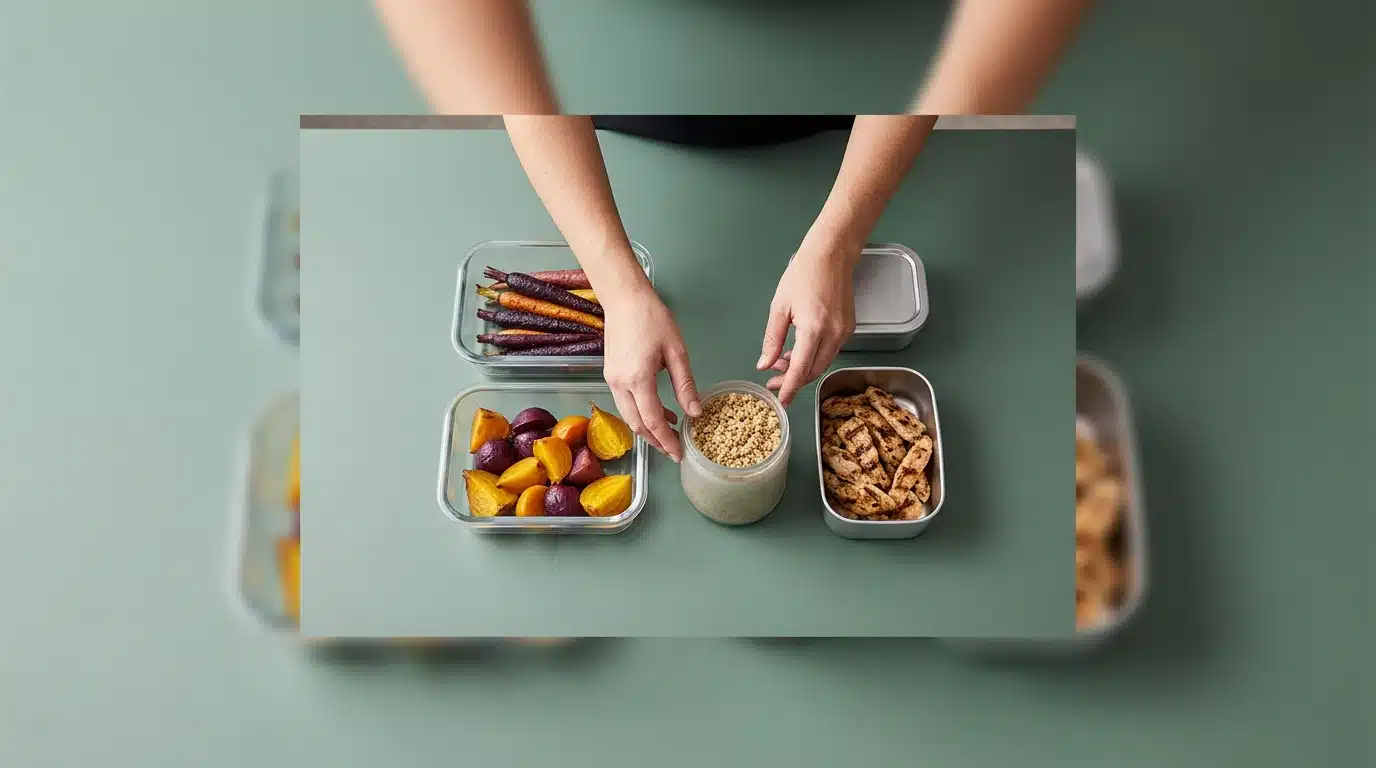
A prime example is prepping a large batch of quinoa. On its own, it’s a blank slate. But by tossing it with a dressing made from tahini, garlic, and water, then topping it with chickpeas roasted with smoked paprika and sumac, you suddenly have a foundation for a compelling meal. According to a report by the Culinary Institute of America, home cooks using Middle Eastern and Mediterranean spice blends are 63% more likely to stick with their healthy eating plans due to higher flavor satisfaction. The rich history of this region provides endless inspiration for uncomplicated yet deeply satisfying main dishes.
Asian-Inspired Weeknights: Umami-Rich and Quick
If you’re seeking a flavor explosion that takes seconds to deploy, look no further than the umami-rich staples of Asian cuisines. Ingredients like Korean gochujang (a fermented chili paste), Japanese miso (fermented soybean paste), and Thai fish sauce are concentrated sources of savory depth. Their intensity means you only need a small amount, and they last for months—sometimes even years.
The underrated factor here is their versatility. You can whip up a large batch of marinade using gochujang, soy sauce, ginger, and garlic. Use it to coat chicken, tofu, or salmon before baking or grilling. That single prep step creates a flavor-packed protein you can add to rice bowls, salads, or wraps all week. So, is it really more work than just sprinkling on salt and pepper? I suspect the five minutes it takes to mix the sauce pays you back tenfold in taste.
These powerful ingredients are one of the key unseen truths of genuinely quick and healthy meals; they do the heavy lifting for you. Forget simmering a sauce for hours. A spoonful of white miso stirred into hot water with some tofu and scallions becomes a satisfying soup in under three minutes.
Nordic Nuances: Freshness and Fermentation
While Mediterranean and Asian flavors are well-established, the fresh, sharp notes of Nordic cooking are an emerging trend perfect for weeknight prep. This approach emphasizes fresh herbs, whole grains, and preservation techniques like pickling. The flavor profile is less about heavy sauces and more about clean, bright tastes—think dill, caraway, juniper, and mustard.
A simple “prep” you can do is quick-pickling. Thinly slice a red onion and submerge it in a jar with equal parts vinegar and water, plus a pinch of salt and sugar. In 30 minutes, you have a vibrant, crunchy condiment that cuts through the richness of roasted meats or adds a zesty bite to salads. It’s an incredibly simple way to add acidity and complexity without adding fat or significant calories.
This focus on preservation leads directly to one of the most significant trends in health and flavor.
Incorporating Fermented Foods for Gut Health
Fermentation is an ancient technique that’s finding new life in modern meal prep, largely for its gut-health benefits. But from a purely culinary perspective—and let’s be honest, that’s what gets you excited to eat—fermented foods are ready-to-use flavor powerhouses. Items like kimchi, sauerkraut, and kefir require zero cooking and add instant layers of sour, spicy, and savory notes.
Dr. Anya Sharma, a nutritionist and author of “The Fermented Kitchen,” explains, “The regular inclusion of varied fermented foods is one of the most direct ways to support microbiome diversity.” For the meal prepper, this means you can simply add a forkful of kimchi to your rice bowl or serve a scoop of sauerkraut alongside your pre-cooked sausage and potatoes. No extra cooking is required. This is a perfect example of how an advanced culinary concept can be simplified for huge weekly benefits.
The path forward for meal prep isn’t about finding more efficient ways to cook bland food. It’s about building a pantry of global ingredients that do the work for you, ensuring that every meal you’ve planned is one you actually want to eat.
Meal Prep as an Act of Future Self-Care
The evolution of meal prep reveals a underlying shift in our relationship with food and time. We’re moving beyond mere efficiency and optimization to a more holistic view where planning is an act of kindness to our future selves. The tools and techniques discussed are not just about saving an hour on a Tuesday night; they are about reclaiming mental energy, reducing decision fatigue, and ensuring the food we eat is both nourishing and genuinely enjoyable.
Instead of trying to implement every new trend at once, what is the single smallest change you could make this week? Perhaps it’s simply prepping one versatile grain, like quinoa, or trying a single new spice blend to transform a familiar protein. The goal is not perfection, but sustainable progress. As our kitchens become smarter and our pantries more global, the ultimate question remains: how will we use this reclaimed time and energy to enrich other parts of our lives?
Frequently Asked Questions
What are the most innovative tools for meal prepping efficiently?
The most innovative tools are AI-powered meal planning apps and smart kitchen appliances. Apps like NutriPlan AI can create personalized meal plans based on your health data and even generate shopping lists that minimize waste. Smart multicookers and ovens automate complex cooking processes, allowing for precise, hands-off batch cooking.
How can I incorporate global flavors into my healthy meal prep without it being complicated?
The easiest way is to focus on versatile sauces, spice blends, and marinades. You can prep a large batch of a single protein, like chicken or tofu, and then portion it out to be seasoned differently. For example, use a Greek blend for salads, a taco seasoning for bowls, and a teriyaki marinade for stir-fries to create distinct meals from the same base ingredient.
Are there new ways to store meal prep to keep food fresh longer?
Yes, consumer-grade vacuum sealing technology is a turning point. By removing oxygen, vacuum sealers can dramatically extend the freshness of both refrigerated and frozen foods, preventing freezer burn and sogginess. some modern glass containers come with manual vacuum pumps to keep salads and vegetables crisp for days longer than standard containers.
What are the benefits of a flexitarian approach to meal prepping?
A flexitarian approach, which prioritizes plant-based foods without eliminating meat entirely, offers great flexibility and health benefits. It naturally increases your intake of fiber and micronutrients while reducing saturated fat. This makes your meal prep more varied, affordable, and environmentally sustainable without adhering to a restrictive diet.
How do current health trends impact the way we approach meal prep?
Current health trends are shifting meal prep away from rigid calorie counting towards a focus on nutrient density and personalization. The rise of plant-forward eating, gut health awareness, and personalized nutrition means people are prepping more diverse ingredients like fermented foods, a wider variety of vegetables, and plant-based proteins to support overall wellness rather than just weight management.