Stand Mixer Guide 2026: Power, Attachments, Durability Compared
Anúncios
Decoding the Best Stand Mixers of 2026: Your Ultimate Stand Mixer Guide
Welcome to the definitive Stand Mixer Guide for 2026! In the dynamic world of kitchen appliances, choosing the perfect stand mixer can often feel like navigating a culinary labyrinth. With countless models boasting varying power, an array of attachments, and promises of unmatched durability, making an informed decision is paramount. Whether you’re a seasoned baker, an enthusiastic home cook, or just starting your culinary journey, a reliable stand mixer is an indispensable tool that can elevate your creations and simplify your kitchen tasks. This comprehensive guide is designed to cut through the noise, providing you with a detailed analysis of the key factors to consider when investing in this essential piece of equipment.
Anúncios
The year 2026 brings with it new innovations and refined classics in the stand mixer market. From powerful motors that tackle the densest doughs to versatile attachments that transform your mixer into a multi-functional kitchen powerhouse, the options are more exciting than ever. Our goal is to equip you with the knowledge needed to select a stand mixer that not only meets your current needs but also stands the test of time, proving to be a worthy investment for years to come. We’ll delve deep into the critical aspects of power, dissect the utility of various attachments, and scrutinize the build quality that defines true durability. Let this Stand Mixer Guide be your trusted companion in finding the perfect culinary ally.
Anúncios
The Heart of the Mixer: Understanding Power and Motor Performance
When it comes to selecting a stand mixer, power is often the first specification people look at, and for good reason. The motor is the engine of your mixer, dictating its ability to handle various mixing tasks, from gently folding delicate ingredients to kneading stiff bread doughs. However, merely looking at wattage can be misleading. A higher wattage doesn’t always translate to superior performance; it’s the combination of wattage, motor type, and gearing that truly determines a mixer’s true power and efficiency.
Wattage vs. Horsepower: What Really Matters?
Traditionally, stand mixers have been rated by wattage. You’ll find models ranging from 250 watts for lighter tasks to over 1000 watts for heavy-duty commercial-grade machines. For most home bakers, a mixer in the 300 to 600-watt range is more than sufficient. However, some manufacturers now also quote horsepower (HP), especially for their more robust models. While wattage measures electrical power consumption, horsepower indicates the mechanical power output. A higher HP often suggests a more durable motor capable of maintaining speed under heavy loads.
The key takeaway here is not to get solely fixated on the numbers. A well-engineered 325-watt mixer from a reputable brand might outperform a generic 600-watt model due to better motor design, gearbox efficiency, and overall construction. Look for mixers that offer a direct drive motor, which typically transfers power more efficiently to the attachments, resulting in less power loss and better performance, especially with thick batters and doughs. This is a crucial aspect our Stand Mixer Guide emphasizes for long-term satisfaction.
Motor Type and Durability
There are generally two types of motors found in stand mixers: AC (alternating current) and DC (direct current). AC motors are common and reliable, often found in traditional kitchen appliances. DC motors, while sometimes more expensive, tend to be more energy-efficient, quieter, and offer better torque at lower speeds, which is ideal for kneading heavy doughs without straining the motor. They also often provide more consistent power delivery, which can extend the lifespan of the mixer.
Another factor influencing motor durability is overload protection. High-quality stand mixers are equipped with mechanisms that prevent the motor from overheating or burning out when faced with an excessively heavy load. This could be an automatic shut-off feature or a thermal fuse. Understanding these features is vital when assessing the long-term reliability of your potential investment, a core component of this Stand Mixer Guide.
Speed Settings and Planetary Mixing Action
Beyond raw power, the versatility of speed settings plays a significant role. Most stand mixers offer anywhere from 3 to 12-speed options, often with a soft start feature to prevent ingredients from splattering. A good range of speeds allows for precise control, from a gentle stir for delicate sauces to a powerful whip for meringues or a slow, steady knead for bread dough. Look for models with precise electronic speed control, which maintains consistent speed regardless of the load.
The planetary mixing action is another fundamental design element that ensures thorough mixing. This refers to the way the attachment rotates in one direction while the head of the mixer rotates in the opposite direction, covering the entire circumference of the bowl. This action eliminates the need to constantly scrape down the sides of the bowl, ensuring all ingredients are incorporated evenly. This innovative design is a hallmark of effective stand mixers and a key feature we highlight in our Stand Mixer Guide.
Beyond the Basics: Exploring Stand Mixer Attachments
While the core function of a stand mixer is, of course, mixing, its true versatility often lies in the array of attachments it can accommodate. These accessories can transform your mixer from a simple baker’s tool into a multi-functional kitchen workhorse, capable of everything from making fresh pasta to grinding meat or even churning ice cream. Understanding the utility of various attachments is crucial when comparing models in our Stand Mixer Guide.
Standard Attachments: The Essential Trio
Almost every stand mixer comes with a set of standard attachments, each designed for specific tasks:
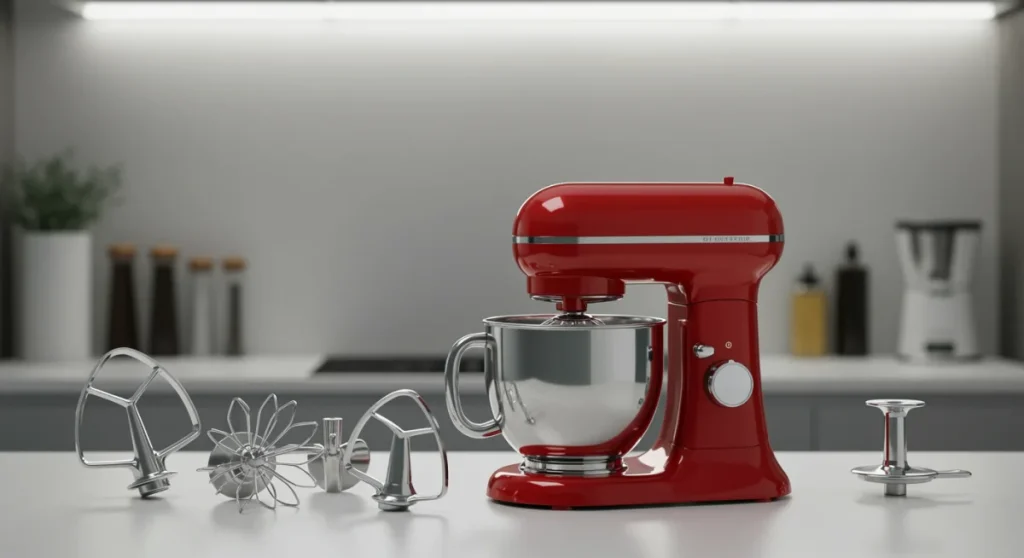
- Flat Beater (Paddle Attachment): This is your go-to for general mixing. Ideal for creaming butter and sugar, mixing cake batters, cookie doughs, mashed potatoes, and even shredding cooked chicken. Its flat, wide surface ensures thorough incorporation of ingredients.
- Wire Whip (Whisk Attachment): Essential for aerating ingredients. Use it for whipping egg whites into stiff peaks, making meringues, whipping cream, and light batters. The wires are designed to incorporate air efficiently, creating light and fluffy results.
- Dough Hook: The baker’s best friend for kneading yeast doughs. Its spiral or C-shaped design mimics hand-kneading, developing gluten in bread, pizza, and pasta doughs, saving you significant time and effort.
Ensure these standard attachments are made from durable materials, such as stainless steel or coated aluminum, for longevity and ease of cleaning. Some cheaper models might include plastic attachments, which are less durable and can be prone to breaking under heavy loads.
Optional Attachments: Expanding Your Culinary Horizons
This is where stand mixers truly shine in terms of versatility. Many brands, particularly those with a power hub on the front of the mixer, offer an extensive range of optional attachments that can dramatically expand your cooking repertoire. Our Stand Mixer Guide showcases the most popular and useful:
- Pasta Maker Attachments: From rolling out sheets of fresh pasta to cutting spaghetti, fettuccine, or even making ravioli, these attachments bring authentic Italian cuisine to your kitchen.
- Meat Grinder/Food Grinder: Perfect for making your own sausages, ground meat for burgers, or even grinding vegetables for relishes and purees. This ensures you know exactly what goes into your food.
- Slicer/Shredder Attachments: Great for quickly grating cheese, slicing vegetables for salads, or shredding cabbage for coleslaw. These can save immense time compared to manual grating.
- Juicer Attachments: Some mixers offer citrus juicers or slow juicers for fresh fruit and vegetable juices.
- Ice Cream Makers: A bowl attachment that freezes and churns your favorite ice cream, sorbet, or frozen yogurt.
- Food Processor Attachment: Essentially turns your stand mixer into a compact food processor for chopping, slicing, and dicing.
- Grain Mill: For those who enjoy baking with freshly milled flour, this attachment grinds whole grains.
When considering optional attachments, think about your cooking habits and what tasks you perform most often. Investing in a mixer with a robust attachment hub and a wide selection of accessories can be a game-changer for your kitchen productivity. This flexibility is a major selling point for many models featured in our Stand Mixer Guide.

Built to Last: Assessing Durability and Construction Quality
A stand mixer is a significant investment, and you want it to last. Durability is not just about the motor; it encompasses the entire construction of the machine, from its housing to its internal gears and bowl material. A truly durable stand mixer will withstand years of heavy use without faltering, a key consideration in our Stand Mixer Guide.
Materials Matter: Housing and Gears
The housing of a stand mixer is typically made from either plastic or metal. While plastic housings can make mixers lighter and more affordable, they are generally less durable and may vibrate more during heavy-duty tasks. Full metal construction, often die-cast zinc or stainless steel, offers superior stability, reduces vibration, and significantly enhances the longevity of the appliance. These mixers feel more substantial and are built to handle the rigors of frequent use.
Internal gearing is another critical component often overlooked. High-quality stand mixers feature metal gears, which are far more robust and durable than plastic gears. Plastic gears are prone to stripping under heavy loads, leading to premature failure of the mixer. While you can’t always inspect the internal gears before purchase, reputable brands known for their durability almost always use metal gearing. Researching brand reputation and reading user reviews can provide insights into this aspect.
Bowl Capacity and Material
Stand mixer bowls typically range from 3.5 quarts to 7 quarts or more. For most home bakers, a 4.5 to 6-quart bowl is ideal, offering enough capacity for standard recipes without being overly bulky. Consider what you typically bake: a 5-quart bowl can usually handle dough for 4-5 loaves of bread or a double batch of cookies. If you frequently bake for large gatherings or operate a small home business, a larger capacity might be more suitable.
Bowl materials also vary, with the most common being stainless steel, glass, and sometimes ceramic. Stainless steel bowls are lightweight, durable, and easy to clean. Glass bowls offer the advantage of visibility, allowing you to monitor the mixing process, but they are heavier and more fragile. Ceramic bowls are aesthetically pleasing but also heavier and more susceptible to chipping. Many high-end mixers offer stainless steel as standard, with glass or ceramic as optional upgrades. The choice often comes down to personal preference and aesthetic appeal, but stainless steel generally offers the best balance of durability and practicality, as noted in this Stand Mixer Guide.
Stability and Design
A stand mixer needs to be stable on your countertop, especially when kneading dense doughs at higher speeds. Look for mixers with a wide, heavy base and non-slip feet to prevent wobbling or ‘walking’ across the counter. The overall design should also be ergonomic, with easy-to-use controls and a head-lift mechanism (for tilt-head models) that operates smoothly. Bowl attachment and detachment should also be straightforward. A well-designed mixer not only performs better but also enhances the overall user experience, a crucial element in our Stand Mixer Guide.
Key Features and Considerations for 2026 Models
As technology advances, stand mixers continue to evolve, offering a range of features designed to enhance convenience and performance. Here are some additional considerations for 2026 models:
Smart Features and Connectivity
While not universally adopted, some newer stand mixers are beginning to incorporate smart features. This could include integrated scales for precise ingredient measurement, digital timers with automatic shut-off, or even Bluetooth connectivity to app-controlled recipes. While these features can add convenience, they often come at a premium price. Assess whether these smart capabilities align with your cooking style and justify the extra cost. Our Stand Mixer Guide keeps an eye on emerging tech, but prioritizes core functionality.
Noise Level
Some stand mixers can be quite noisy, especially when operating at high speeds or kneading heavy dough. If kitchen noise is a concern, look for models that are specifically advertised as quiet or read reviews that comment on their operational sound levels. DC motors often contribute to quieter operation compared to traditional AC motors.
Cleaning and Maintenance
Ease of cleaning is a practical consideration. Most bowls and standard attachments are dishwasher-safe, but always check the manufacturer’s instructions. The mixer’s head and base should be easy to wipe clean, without too many crevices where food can get trapped. A sleek, minimalist design often translates to easier cleaning, a small but important detail in this Stand Mixer Guide.
Warranty and Brand Reputation
A good warranty is an indicator of a manufacturer’s confidence in their product’s durability. Look for mixers with at least a one-year warranty, with some premium brands offering longer coverage, especially for the motor. Researching brand reputation is also key. Brands that have been trusted for decades in the kitchen appliance space often maintain high standards of quality and customer service, providing peace of mind with your purchase.
Top Stand Mixer Brands and Models for 2026
While this Stand Mixer Guide focuses on general criteria, it’s helpful to know which brands consistently deliver quality and innovation. Here’s a brief overview of some leading contenders for 2026:
KitchenAid: The Enduring Icon
KitchenAid remains the gold standard for many, and for good reason. Their mixers are renowned for their robust all-metal construction, powerful motors (often with direct drive), and an unparalleled range of attachments. Models like the Artisan and Professional series continue to be top sellers, offering a balance of power, capacity, and aesthetic appeal. They are an investment, but their durability and versatility make them a favorite among serious home bakers. KitchenAid’s planetary mixing action is arguably the industry benchmark.
Cuisinart: Innovation Meets Performance
Cuisinart has carved out a strong niche with its powerful and stylish stand mixers. They often feature high-wattage motors and a good range of speeds, making them suitable for heavy-duty tasks. Cuisinart models frequently come with a generous set of standard attachments and offer a decent selection of optional accessories. Their designs are often sleek and modern, fitting well into contemporary kitchens. Our Stand Mixer Guide recognizes Cuisinart for its consistent performance.
Breville: Precision and Advanced Features
Breville stand mixers are known for their precision engineering and advanced features. Many models include LCD displays, integrated timers, and even load-sensing technology that automatically adjusts power to maintain speed. While often on the higher end of the price spectrum, Breville offers exceptional performance and thoughtful design, appealing to those who appreciate culinary technology. They often focus on user experience and intuitive controls, which is a big plus in this Stand Mixer Guide.
Bosch: The Workhorse for Bakers
Bosch stand mixers, particularly their Universal Plus series, have a loyal following among serious bakers, especially those who frequently make large batches of bread. Known for their unique bottom-drive design (where the motor is below the bowl), they are incredibly stable and powerful, excelling at kneading large quantities of dough. Their bowl capacity is often generous, and they offer a good range of attachments, albeit with a different attachment system than typical planetary mixers. This Stand Mixer Guide highlights Bosch for its specialized strength in bread making.
Kenwood: European Engineering and Versatility
Kenwood, a prominent European brand, offers a range of high-performance stand mixers known for their powerful motors, robust construction, and extensive array of attachments. Their Chef and Major series are particularly popular, offering large capacities and a wide selection of accessories that can turn the mixer into a complete kitchen machine. Kenwood often emphasizes precise speed control and durability, appealing to discerning cooks and bakers.
Making Your Final Decision: A Checklist from Our Stand Mixer Guide
As you near your decision, consider these final points to ensure you pick the best stand mixer for your needs:
- Budget: Stand mixers range widely in price. Determine how much you’re willing to spend, keeping in mind that a higher price often correlates with better durability and more features.
- Intended Use: How often will you use it? What tasks will you perform most? If it’s primarily for occasional cookie baking, a less powerful model might suffice. If you’re a bread-making enthusiast, invest in higher power and metal gears.
- Countertop Space: Stand mixers are often large and heavy. Measure your available counter space and consider storage options if you plan to put it away after each use.
- Bowl Capacity: Match the bowl size to your typical batch sizes.
- Attachments: Do the included attachments meet your needs? Are there optional attachments you foresee wanting in the future, and is the mixer compatible with them?
- Noise Level: If you have an open-plan kitchen or are sensitive to noise, research models known for quieter operation.
- Aesthetics: While not critical for performance, the look of your mixer can be important if it will be a permanent fixture on your countertop.
- Reviews and Ratings: Consult independent reviews and user testimonials for real-world insights into performance and durability. This Stand Mixer Guide provides a starting point, but personal experiences are invaluable.
Conclusion: Your Perfect Culinary Companion Awaits
Choosing the right stand mixer in 2026 is an investment in your culinary future. By carefully considering factors such as motor power, the versatility of attachments, and the overall durability of its construction, you can select a machine that will serve you faithfully for many years to come. This Stand Mixer Guide has aimed to demystify the options, empowering you to make a choice that aligns perfectly with your baking and cooking aspirations.
Whether you prioritize sheer power for heavy doughs, a vast array of attachments for diverse culinary exploration, or a robust build that promises unwavering reliability, there’s a stand mixer out there for you. Take your time, weigh your options, and imagine the delicious possibilities that await with your new kitchen companion. Happy baking, and may your stand mixer bring joy and efficiency to all your culinary endeavors!