Unlocking the Secrets of Taste: A 3-Month Deep Dive into Flavor Chemistry Acids and Bases for 2026
Welcome to a groundbreaking exploration into the intricate world of flavor chemistry, specifically tailored for the discerning palates and innovative minds of 2026. In this comprehensive guide, we embark on a 3-month deep dive into the fundamental yet profoundly influential roles of flavor chemistry acids and bases. These chemical compounds, often overlooked in their complexity, are the silent architects behind every taste sensation, every aromatic nuance, and every perfectly preserved dish we encounter. For professionals in food science, culinary arts, product development, and even the avid home cook looking for insider knowledge, understanding the delicate balance of pH is not just an advantage—it’s a necessity.
Anúncios
The landscape of food and beverage is constantly evolving. Consumer demand for novel, intense, and authentic flavors is at an all-time high. Simultaneously, the industry faces increasing pressure to develop sustainable, healthy, and safe food options. At the heart of these challenges and opportunities lies the mastery of flavor chemistry, and more specifically, the strategic manipulation of acids and bases. This article is designed to equip you with the advanced insights and practical understanding needed to navigate and innovate within this dynamic field in 2026 and beyond.
Anúncios
Our journey will unfold over three distinct months, each building upon the last, culminating in a holistic understanding that transcends basic definitions. We will move beyond the simple sourness of an acid or the bitterness of a base, delving into the molecular interactions that define our gustatory experience. Prepare to revolutionize your approach to flavor creation, optimization, and preservation as we uncover the insider knowledge that will set you apart.
Month 1: The Foundational Principles of Flavor Chemistry Acids and Bases
Week 1: Demystifying Acids and Bases – Beyond the Basics
Our initial foray into flavor chemistry begins with a robust review of what acids and bases truly are, but with a specific lens on their relevance to food. Forget your high school chemistry class; we’re focusing on the practical implications for flavor. We’ll revisit the Brønsted-Lowry and Lewis definitions, but more importantly, we’ll discuss how these theories translate into the tangible properties of food.
Acids, characterized by their ability to donate protons or accept electron pairs, are pervasive in the culinary world. Think of the refreshing tang of citric acid in a lemon, the crispness imparted by malic acid in an apple, or the complex fermentation notes from lactic acid in yogurt. Bases, though less commonly associated with direct taste, play a crucial role in buffering systems, influencing texture, and mediating reactions that produce other flavor compounds. Examples include sodium bicarbonate in baking, which can neutralize acids and contribute to leavening, or the alkaline processing of olives to reduce bitterness.
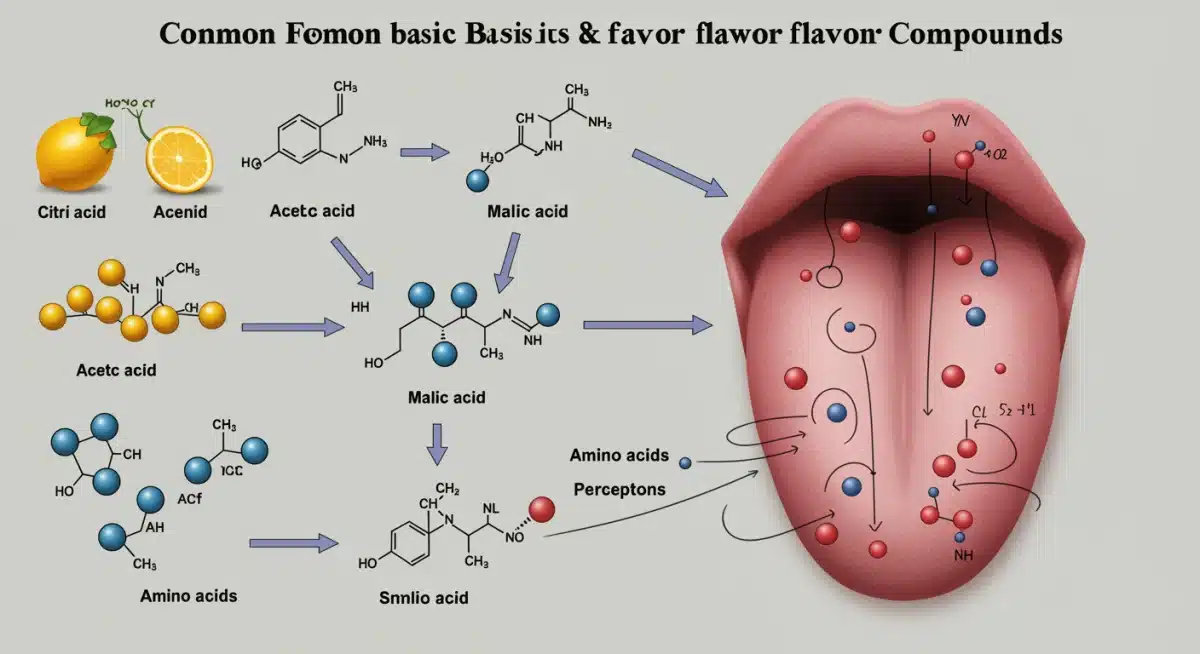
Understanding the molecular structure of common food acids (e.g., citric, malic, tartaric, acetic, ascorbic) and bases (e.g., bicarbonates, carbonates, certain amino acids) is paramount. Each possesses unique functional groups that dictate its strength, solubility, and reactivity, directly impacting its contribution to flavor. We’ll examine how the dissociation constant (Ka or pKa) of an acid or base is not just a number, but a predictor of its sensory impact and its behavior in a food matrix.
Week 2: The pH Scale – Flavor’s Master Conductor
The pH scale, ranging from 0 to 14, is arguably the most critical parameter in flavor chemistry. It’s not merely a measure of acidity or alkalinity; it’s the master conductor orchestrating a symphony of chemical reactions that define a food’s sensory profile. A slight shift in pH can dramatically alter taste perception, aroma release, color stability, and microbial growth.
We will explore how pH directly influences the perception of sourness. While acids are responsible for sourness, the intensity and quality of that sourness are pH-dependent. For instance, a low pH enhances the perception of sourness, but too low can lead to an unpleasant astringency. Conversely, a higher pH can dull sour notes, making a product taste flat or bland if not balanced. Beyond taste, pH affects the ionization state of aroma compounds. Many volatile compounds exist in different forms depending on pH, and these forms can have vastly different vapor pressures and solubilities, thus altering how we smell them. Consider the difference in aroma profile of coffee brewed at different pH levels, or the evolution of wine aromas as its pH subtly changes with age.
This week will also delve into buffering systems in food. Natural buffers, such as proteins and phosphates, resist changes in pH, which is vital for maintaining flavor stability and preventing undesirable reactions. Understanding how to leverage or manipulate these buffers is a key skill for any flavor chemist or food developer.
Week 3: Taste Receptors and Sensory Perception of Flavor Chemistry Acids
How do we actually perceive the taste of acids and bases? This week focuses on the fascinating intersection of chemistry and biology. We’ll examine the specific taste receptors on our tongue responsible for detecting sourness and bitterness.
Sourness is primarily detected by proton channels (specifically, the OTOP1 proton channel has been identified as a key sour taste receptor), which respond to the presence of H+ ions. The concentration and type of acid influence the intensity and quality of sourness. For example, citric acid often presents a ‘bright’ sourness, while acetic acid can be ‘sharp’ or ‘vinegary’.
Bitterness, while often associated with bases, is a more complex taste sensation triggered by a diverse array of compounds, many of which are not strictly basic. However, some basic compounds can indeed elicit bitter notes. We will explore the T2R family of G-protein coupled receptors responsible for bitterness perception and discuss why certain alkaloids (often basic) are perceived as bitter. Crucially, we’ll also examine the concept of ‘pH-dependent bitterness’ where the pH of a food matrix can expose or mask bitter compounds.
Beyond the primary taste receptors, we’ll touch upon trigeminal irritation (e.g., the tingling sensation from carbonation or the burning from capsaicin), which can be modulated by pH, and how it contributes to the overall mouthfeel and flavor profile of food items. This week provides the biological context necessary to truly understand why manipulating flavor chemistry acids and bases has such a profound impact on our dining experience.
Week 4: Influence on Food Stability and Preservation
The role of acids and bases extends far beyond immediate taste and aroma; they are critical for food safety and shelf life. This week, we explore how pH influences microbial growth, enzyme activity, and chemical degradation reactions.
Many pathogenic and spoilage microorganisms thrive within a narrow pH range. By lowering the pH (acidification), we can inhibit the growth of undesirable bacteria, yeasts, and molds, thereby extending the shelf life of products like pickles, jams, and fermented foods. We’ll discuss various acidification techniques, including the use of direct acidulants (e.g., citric acid, phosphoric acid), fermentation processes (e.g., lactic acid bacteria), and the regulatory guidelines surrounding pH control for food safety.
Enzyme activity is also highly pH-dependent. Enzymes, which are biological catalysts, have optimal pH ranges where they exhibit maximum activity. Outside this range, their activity can be reduced or even completely inhibited. This principle is exploited in many food processing operations, such as blanching (to deactivate enzymes that cause browning) or controlling enzymatic browning in fruits and vegetables using acidulants. We will examine specific examples of how pH control is used to prevent enzymatic spoilage and maintain food quality.
Furthermore, pH influences the stability of food components like vitamins, pigments, and fats. For instance, vitamin C (ascorbic acid) is more stable in acidic conditions, while chlorophyll (green pigment) degrades rapidly in acid, turning olive green. Understanding these chemical reactions is essential for product development and ensuring both the nutritional value and aesthetic appeal of food over time.
Month 2: Advanced Applications and Interplay of Acids and Bases in Flavor Systems
Week 5: Acidulants and Alkalizers in Product Development
Building on our foundational knowledge, this week delves into the practical application of various acidulants and alkalizers in modern food product development. We’ll move beyond the ‘why’ to the ‘how’ and ‘which’ compounds are chosen for specific applications.
Common acidulants include citric acid (provides a sharp, bright sourness, often used in beverages, candies, and fruit products), malic acid (smoother, lingering sourness, found in apples, often used in confectionery), tartaric acid (strong, astringent sourness, characteristic of grapes and wine), lactic acid (mild, creamy sourness, typical of dairy products and fermented foods), and phosphoric acid (sharp, clean sourness, prevalent in colas). Each acidulant has a distinct flavor profile, buffering capacity, and interaction with other ingredients. We will analyze case studies of how specific acidulants are chosen to achieve desired sensory attributes in a range of products, from soft drinks to salad dressings.
Alkalizers, while less common as direct flavor contributors, are vital for pH adjustment, leavening, and texture modification. Sodium bicarbonate (baking soda) and sodium carbonate are prime examples, used in baked goods, some confectioneries, and even in processing cocoa. We’ll discuss their role in neutralizing excess acidity, creating carbon dioxide for leavening, and influencing the Maillard reaction (browning) which generates complex flavors.
This week emphasizes the strategic selection of acidulants and alkalizers based on their functional properties, sensory impact, cost-effectiveness, and regulatory status. It’s about making informed decisions to optimize flavor and product performance.
Week 6: pH Modulation of Aroma Release and Perception
As we learned, pH significantly affects how we perceive aromas. This week, we’ll dive deeper into the specific mechanisms and practical implications of pH modulation on volatile aroma compounds. Many aroma compounds are weak acids or bases, meaning their ionization state changes with pH. The un-ionized form is often more volatile and lipophilic, meaning it can more easily evaporate and interact with olfactory receptors in the nose.
Consider the delicate balance in fruit juices: a slightly acidic pH helps to keep certain fruity esters in their volatile form, enhancing their aroma. Conversely, in some dairy products, a controlled increase in pH can reduce the perception of undesirable acidic notes while allowing creamy or buttery aromas to become more prominent. We’ll explore how pH influences the equilibrium between volatile and non-volatile forms of key aroma molecules, affecting their headspace concentration and, consequently, their perceived intensity and quality.
This week will also cover the concept of ‘flavor encapsulation’ and how pH can be used to trigger the release of encapsulated flavors at specific moments, for example, upon mastication or digestion. This is a cutting-edge area in flavor delivery systems, allowing for sustained or burst flavor release, and pH plays a crucial role in the integrity and release kinetics of many encapsulation matrices.
Week 7: The Maillard Reaction and Caramelization – pH’s Role in Flavor Development
Beyond direct taste and aroma, acids and bases are pivotal in complex flavor generation reactions, notably the Maillard reaction and caramelization. These non-enzymatic browning reactions are responsible for the rich, savory, and sweet-caramelized notes in countless foods, from roasted meats and baked goods to coffee and chocolate.
The Maillard reaction, a complex series of reactions between reducing sugars and amino acids, is highly sensitive to pH. It generally proceeds optimally in slightly alkaline to neutral conditions (pH 6-8). Lowering the pH (acidic conditions) can inhibit the Maillard reaction, which is why baked goods with acidic ingredients (like buttermilk) brown less intensely unless an alkalizer is added. Conversely, increasing the pH can accelerate the reaction, leading to more rapid browning and the formation of specific flavor compounds. We’ll examine how different pH levels favor the formation of distinct Maillard reaction products, leading to diverse flavor profiles (e.g., meaty, bready, chocolatey).
Caramelization, the thermal degradation of sugars, is also influenced by pH, though to a lesser extent than the Maillard reaction. It is typically catalyzed by both acids and bases. Acid-catalyzed caramelization tends to produce lighter colored products with more delicate caramel notes, while base-catalyzed caramelization often results in darker, more intense, and sometimes bitter caramel flavors. Understanding these pH-dependent nuances allows for precise control over the development of key flavor compounds in a wide array of food products.
Week 8: Interacting with Other Flavor Components: Sweeteners, Salts, and Umami
Flavor is rarely a singular sensation; it’s a symphony of interactions. This week, we explore how flavor chemistry acids and bases interact with other fundamental taste components: sweeteners, salts, and umami compounds. The interplay between these elements is crucial for achieving balanced and harmonious flavor profiles.
Acids are often used to balance sweetness, providing a ‘brightening’ effect that prevents products from tasting cloyingly sweet. Think of the perfect balance in lemonade or a fruit tart. The type and concentration of acid can significantly impact the perceived sweetness intensity and quality. Similarly, acids can enhance the perception of saltiness, allowing for reduced sodium levels without compromising taste. This is a vital strategy in developing healthier food options.
The relationship between acids and umami is particularly fascinating. Umami, often described as savory or meaty, is a complex taste primarily triggered by glutamates and nucleotides. While glutamates themselves are amino acids (which can act as weak acids or bases depending on pH), the optimal perception of umami is often enhanced in slightly acidic conditions. We’ll discuss how pH influences the ionization state of glutamate, affecting its binding to umami receptors and thus its perceived intensity. This knowledge is invaluable for developing savory applications, from broths to plant-based meat alternatives.
Understanding these synergistic and antagonistic interactions is key to crafting truly complex and satisfying flavor experiences. It’s about more than just adding ingredients; it’s about understanding their chemical dance.
Month 3: Cutting-Edge Trends, Troubleshooting, and the Future of Flavor Chemistry Acids and Bases
Week 9: Advanced Analytical Techniques for pH and Acid/Base Profiling
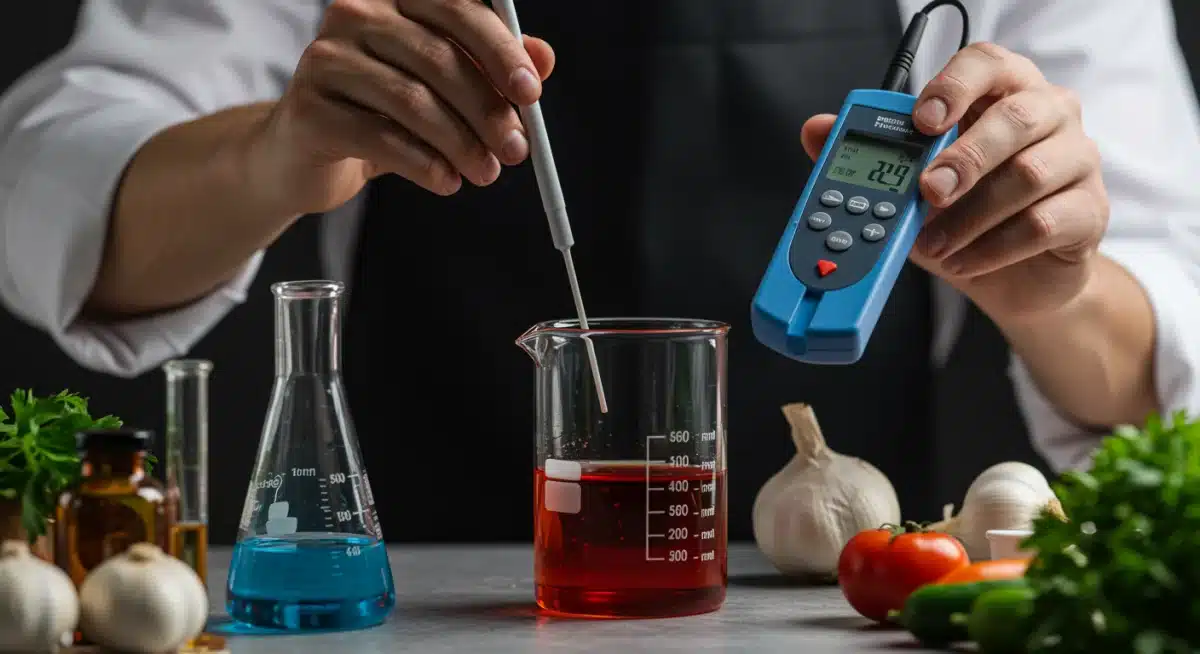
To truly master flavor chemistry acids and bases, one must be proficient in their measurement and characterization. This week focuses on the advanced analytical techniques used in laboratories to precisely quantify and profile acidic and basic components in food.
Beyond standard pH meters, we’ll explore titratable acidity (total acidity), which provides a more complete picture of the acid content than pH alone. We’ll discuss potentiometric titration, conductometric titration, and the use of specific ion electrodes. High-Performance Liquid Chromatography (HPLC) and Gas Chromatography-Mass Spectrometry (GC-MS) are powerful tools for identifying and quantifying individual organic acids (e.g., citric, malic, lactic) and basic compounds, providing a detailed ‘fingerprint’ of a product’s acid-base composition.
Nuclear Magnetic Resonance (NMR) spectroscopy and Fourier-Transform Infrared (FTIR) spectroscopy also offer non-destructive ways to characterize the chemical environment and interactions influenced by pH. We’ll delve into how these techniques are used for quality control, authenticity testing, new product development, and troubleshooting flavor issues. Understanding these methods is crucial for precise formulation and consistent product quality in 2026’s competitive market.
Week 10: Troubleshooting Flavor Imbalances and Off-Notes
Even with the best intentions, flavor imbalances and off-notes can arise. This week is dedicated to diagnosing and rectifying issues related to acid-base chemistry. Common problems include excessive sourness, blandness, metallic tastes, or undesirable bitterness, all of which can be linked to improper pH or acid/base ratios.
We’ll explore systematic approaches to troubleshooting. Is the product too sour? It could be the wrong acidulant, too high a concentration, or a lack of buffering. Is it bland? Perhaps the pH is too high, masking desirable acidic notes, or there isn’t enough acid to ‘brighten’ the flavor. Metallic off-notes can sometimes be exacerbated by low pH, leading to leaching of metals from packaging or equipment. Undesirable bitterness can be a result of alkaline pH exposing certain bitter compounds or incorrect processing conditions.
Case studies will illustrate how to pinpoint the root cause of these issues and implement effective solutions, whether through adjusting pH, changing acidulant types, incorporating buffering agents, or modifying processing parameters. This practical problem-solving approach is critical for any flavor professional.
Week 11: Novel Acidulants, pH Modulators, and Sustainable Sourcing
The future of flavor chemistry is bright, with ongoing research into novel acidulants and pH modulators that offer unique sensory profiles, functional benefits, or sustainable sourcing. This week, we look at emerging trends and ingredients that will shape the industry in 2026 and beyond.
We’ll explore bio-derived acids produced through fermentation (e.g., succinic acid, gluconic acid), which can offer cleaner labels and different flavor nuances compared to traditional chemical synthesis. There’s also growing interest in natural pH regulators from botanical extracts that can serve multiple functions, acting as both flavor enhancers and natural preservatives. The development of ‘slow-release’ acidulants designed to activate at specific points in a process or during consumption is another exciting area.
Sustainability is a major driver, leading to innovations in sourcing and production of existing and new acid/base ingredients. This includes exploring upcycled agricultural byproducts as sources of organic acids or developing more energy-efficient synthesis routes. Understanding these innovations provides a competitive edge in developing next-generation food and beverage products.
Week 12: Regulatory Landscape, Health Implications, and Consumer Perception
Our final week brings together all our learning by examining the broader context of flavor chemistry acids and bases: the regulatory environment, their health implications, and consumer perception. In 2026, transparency and health claims are more scrutinized than ever.
We’ll review global and regional food regulations pertaining to acidulants, pH control, and preservation methods. This includes understanding permitted usage levels, labeling requirements, and specific standards for different food categories (e.g., infant formula, fermented products). Non-compliance can lead to costly recalls and reputational damage, making regulatory knowledge non-negotiable.
From a health perspective, we’ll discuss the impact of acids and bases on dental health (erosion), gut microbiome (fermented foods), and nutrient bioavailability. While acids are crucial for flavor, excessive acidity can have negative health consequences. Conversely, controlled acidity in fermented foods is linked to numerous health benefits. Balancing these factors is a critical aspect of responsible product development.
Finally, we’ll delve into consumer perception. Terms like ‘natural acidity’, ‘pH balanced’, or ‘fermented’ resonate differently with consumers. Understanding how to communicate the role of acids and bases effectively, whether for health benefits, flavor enhancement, or preservation, is vital for marketing and consumer acceptance. This includes navigating the clean label trend and understanding consumer preferences for specific acid sources.
Conclusion: Mastering Flavor Chemistry Acids and Bases for 2026 and Beyond
This 3-month deep dive into flavor chemistry acids and bases has equipped you with a profound understanding of their multifaceted roles. From foundational chemical principles to advanced analytical techniques, from strategic product development to navigating regulatory landscapes, you now possess the insider knowledge to excel in the dynamic world of food and beverage in 2026.
The ability to precisely control and manipulate pH, to select the ideal acidulant or alkalizer, and to anticipate their impact on taste, aroma, stability, and consumer perception, is no longer a niche skill—it is a core competency for any aspiring or established professional in the culinary and food science fields. As consumer expectations for flavor sophistication and health benefits continue to rise, your mastery of these fundamental chemical principles will be your most powerful tool for innovation.
Embrace this knowledge, experiment with confidence, and continue to explore the endless possibilities that acids and bases offer in crafting the next generation of extraordinary food experiences. The future of flavor is in your hands.