Master Roasting Main Dishes: Ultimate 2026 Guide for Perfect Results
Anúncios
The Ultimate Guide to Roasting Main Dishes in 2026: Perfect Results Every Time
Roasting is more than just a cooking method; it’s an art form that transforms simple ingredients into culinary masterpieces. Whether you’re a seasoned chef or a home cook looking to impress, mastering the technique of roasting main dishes can elevate your meals from good to extraordinary. In this ultimate guide for 2026, we’ll delve into everything you need to know to achieve perfect results every time, covering everything from selecting the right ingredients to advanced roasting techniques.
Anúncios
The allure of a perfectly roasted dish lies in its crispy exterior, tender interior, and the rich, concentrated flavors that develop during the cooking process. From succulent meats to caramelized vegetables, roasting offers a versatility that few other methods can match. This comprehensive guide will equip you with the knowledge and confidence to tackle any roasting challenge, ensuring your efforts are rewarded with delicious and memorable meals.
Why Roasting Remains a Culinary Staple
Anúncios
In an age of rapid culinary innovations, roasting continues to hold its ground as a beloved cooking technique. Its enduring popularity stems from several key advantages:
- Flavor Development: Roasting intensifies flavors through the Maillard reaction, creating a savory crust and deepening the taste of ingredients.
- Texture Contrast: The dry heat of the oven crisps the exterior while keeping the interior moist and tender.
- Simplicity: Once prepped, roasting often requires less hands-on attention compared to other cooking methods, freeing you up to focus on other aspects of your meal.
- Versatility: Almost any ingredient, from whole poultry and large cuts of meat to a medley of vegetables, can be roasted successfully.
- Aesthetic Appeal: A beautifully roasted dish, golden brown and aromatic, is inherently appealing and makes for an impressive presentation.
Understanding these benefits is the first step in appreciating the power of roasting main dishes. Let’s embark on this culinary journey together, ensuring your 2026 roasts are the best they’ve ever been.
Essential Equipment for Perfect Roasting
Before you even think about preheating your oven, having the right tools can make a significant difference in your roasting success. Investing in quality equipment will not only simplify the process but also contribute to more consistent and superior results.
The Roasting Pan: Your Foundation
A good roasting pan is indispensable. Look for one that is heavy-duty, preferably made of stainless steel or cast iron, to ensure even heat distribution. A V-rack or flat rack within the pan is crucial as it elevates the food, allowing hot air to circulate all around and preventing the bottom from steaming rather than roasting. This is particularly important when roasting main dishes like whole chickens or large cuts of beef.
- Material Matters: Stainless steel is durable and easy to clean. Cast iron offers excellent heat retention but requires more maintenance. Non-stick pans are convenient but can degrade over time.
- Size and Depth: Choose a pan that’s large enough to accommodate your food without overcrowding, but not so large that juices burn. A deeper pan is better for preventing splatters, especially when roasting high-fat items.
Temperature Control: The Digital Thermometer is Your Best Friend
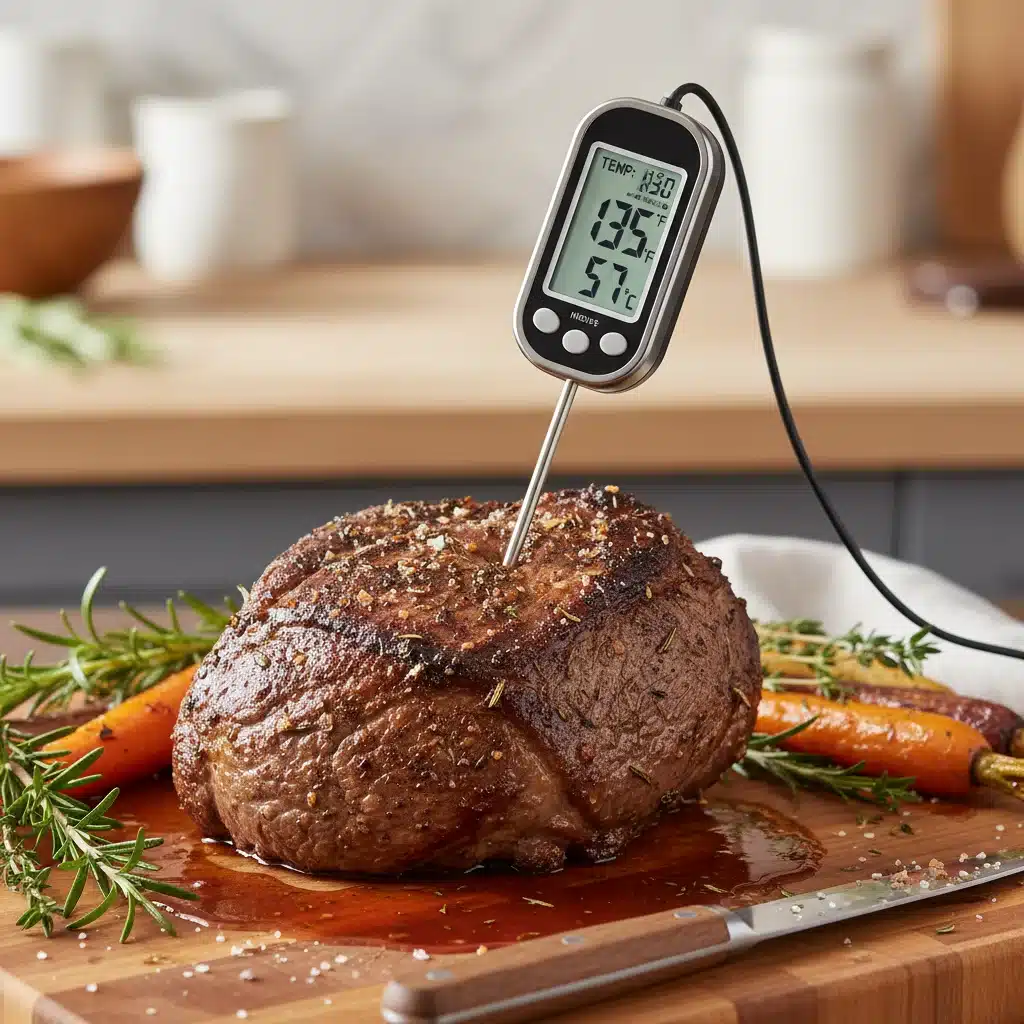
Guessing doneness is a recipe for disaster. A reliable meat thermometer is perhaps the most critical tool for perfect roasting main dishes. Digital instant-read thermometers are highly recommended for their accuracy and speed. For larger roasts, a probe thermometer that stays in the meat during cooking and alerts you when it reaches the desired temperature is incredibly useful.
- Instant-Read vs. Probe: Instant-read thermometers are great for quick checks. Probe thermometers offer continuous monitoring, perfect for long roasts.
- Calibration: Regularly check your thermometer’s calibration to ensure accuracy.
Other Useful Tools:
- Basting Brush: For applying marinades, glazes, or pan juices during cooking.
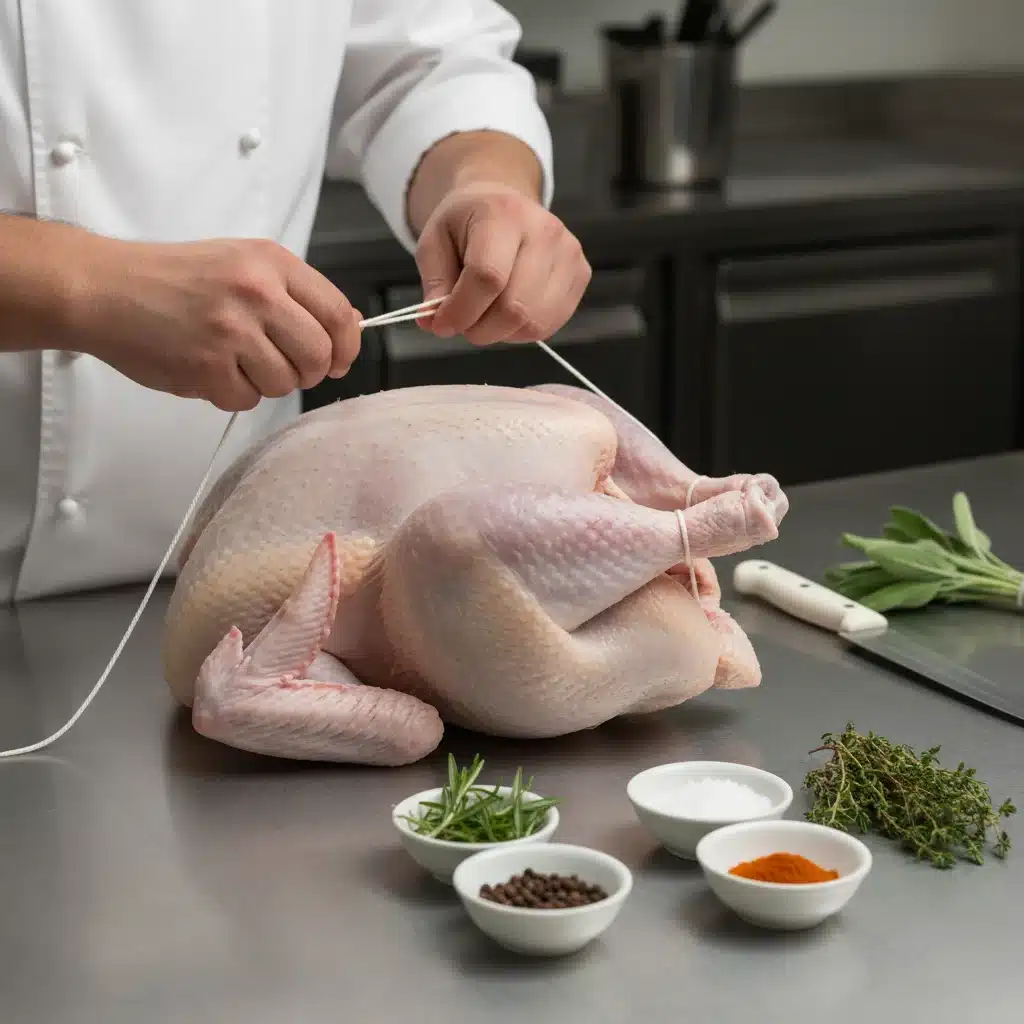
- Kitchen Twine: Essential for trussing poultry, ensuring even cooking and a compact shape.
- Carving Knife and Fork: A sharp knife and sturdy fork are necessary for safely and cleanly carving your roasted masterpiece.
- Fat Separator: A handy tool for making gravies and sauces from pan drippings.
- Oven Mitts/Gloves: High-quality, heat-resistant mitts are essential for safety.
Equipped with these tools, you’re well on your way to mastering the art of roasting main dishes.
Mastering the Art of Roasting Meats
Roasting meat is where many home cooks feel the most pressure. Achieving a perfectly cooked roast – juicy on the inside, crispy on the outside – requires attention to detail and understanding of a few key principles.
Choosing Your Cut
The success of your roasted meat starts with the quality and type of cut. Different meats and cuts require different roasting approaches.
- Poultry (Chicken, Turkey, Duck): Whole birds are excellent for roasting. Opt for free-range or organic for better flavor.
- Beef: Popular roasting cuts include prime rib, tenderloin, sirloin, and round. Marbling (fat within the muscle) is key for a juicy roast.
- Pork: Loin, shoulder (for pulled pork), and leg are common choices. A good fat cap is desirable for crackling.
- Lamb: Leg of lamb, shoulder, or rack of lamb are fantastic for roasting.
Preparation is Key: Seasoning and Trussing
Proper preparation before the roast hits the oven is paramount.
- Bring to Room Temperature: For even cooking, allow larger cuts of meat to sit at room temperature for 30 minutes to an hour before roasting.
- Pat Dry: Moisture on the surface prevents browning. Pat the meat thoroughly dry with paper towels.
- Season Generously: Salt is your best friend. Apply it liberally, along with pepper and other herbs and spices, rubbing them into the surface. For a deeper flavor, season several hours or even a day in advance and refrigerate uncovered to dry out the skin.
- Trussing (for Poultry): Tying the legs and wings of poultry closer to the body ensures more even cooking, preventing delicate parts from overcooking before the thicker parts are done.
Temperature and Time: The Roasting Equation
This is where precision matters most for roasting main dishes.
- High Heat First (Optional): For some meats, starting with a high oven temperature (400-450°F / 200-230°C) for 15-20 minutes helps create a beautiful crust, then reducing the temperature to a lower heat (325-375°F / 160-190°C) for the remainder of the cooking.
- Low and Slow: This method is ideal for tougher cuts or very large roasts, resulting in incredibly tender meat.
- Use a Thermometer: Always cook to internal temperature, not just time. Time is a guideline; temperature is a fact.
- Resting Period: Once cooked, always, always, always let your roast rest. Transfer it to a cutting board, tent loosely with foil, and let it rest for 10-30 minutes (depending on size). This allows the juices to redistribute, resulting in a more tender and flavorful piece of meat. Cutting too soon will cause all the juices to run out.
Doneness Temperatures for Common Meats:
- Chicken/Turkey: 165°F (74°C) in the thickest part of the thigh.
- Beef: Rare: 125-130°F (52-54°C), Medium-Rare: 130-135°F (54-57°C), Medium: 135-140°F (57-60°C). (Remove from oven 5-10°F below desired final temp due to carryover cooking).
- Pork: 145°F (63°C) for medium-rare (safe and juicy), 160°F (71°C) for well-done.
- Lamb: Medium-Rare: 130-135°F (54-57°C), Medium: 135-140°F (57-60°C).
Perfectly Roasted Vegetables: A Flavorful Companion
Roasted vegetables are far more than just a side dish; they can be a star in their own right, and when paired with roasting main dishes, they complete the meal beautifully. The high heat of the oven caramelizes their natural sugars, creating a depth of flavor and a tender-crisp texture that is irresistible.
Choosing Your Vegetables
Almost any vegetable can be roasted, but some are particularly well-suited:
- Root Vegetables: Potatoes, carrots, parsnips, sweet potatoes, beets, turnips. These become wonderfully sweet and tender.
- Cruciferous Vegetables: Broccoli, cauliflower, Brussels sprouts. Roasting brings out their nutty flavors and gives them a pleasant char.
- Squash: Butternut squash, acorn squash, delicata squash. They caramelize beautifully.
- Alliums: Onions, shallots, garlic. They mellow and sweeten significantly.
Preparation for Optimal Roasting
- Wash and Dry: Ensure vegetables are clean and thoroughly dry to promote browning.
- Cut Uniformly: This is crucial for even cooking. Try to cut vegetables into similar-sized pieces so they finish roasting at the same time.
- Oil and Season Liberally: Toss vegetables with a good quality oil (olive oil, avocado oil) and season generously with salt, pepper, and any desired herbs or spices. Don’t be shy with the oil; it helps with browning and flavor.
- Don’t Overcrowd the Pan: This is a common mistake. If vegetables are too close together, they will steam instead of roast. Use multiple pans if necessary, ensuring a single layer with space between pieces for air circulation.
Roasting Temperatures and Techniques for Vegetables
Most vegetables roast well at higher temperatures, typically between 400-425°F (200-220°C). The exact time will depend on the vegetable and the size of the pieces.
- Potatoes/Root Vegetables: 30-45 minutes, flipping halfway, until tender and caramelized.
- Broccoli/Cauliflower/Brussels Sprouts: 20-30 minutes, until tender-crisp and slightly charred.
- Squash: 25-40 minutes, depending on the type and size, until fork-tender.
Consider adding aromatics like garlic cloves, rosemary, or thyme to the pan during the last 15-20 minutes of roasting for an extra layer of flavor. Combining various vegetables with your roasting main dishes creates a harmonious and complete meal.
Advanced Roasting Techniques for the Home Cook
Once you’ve mastered the basics, you might want to explore some advanced techniques to further elevate your roasting main dishes.
Spatchcocking Poultry
Spatchcocking (or butterflying) a chicken or turkey involves removing the backbone and flattening the bird. This technique offers several advantages:
- Faster Cooking: The flattened bird cooks more quickly and evenly.
- Crispier Skin: More surface area is exposed to the direct heat, resulting in incredibly crispy skin all over.
- Easier Carving: The flat shape makes carving much simpler.
Reverse Searing for Large Roasts
Traditionally, roasts are seared at high heat then finished at lower temperatures. Reverse searing flips this process:
- Roast the meat at a very low temperature (e.g., 200-250°F / 95-120°C) until it reaches just below your desired internal temperature.
- Remove from the oven, tent with foil, and let it rest.
- Just before serving, sear the roast in a very hot pan or under a broiler for a few minutes per side to develop a beautiful crust.
This method results in incredibly even cooking from edge to edge and a wonderfully tender interior. It’s particularly effective for thicker cuts of beef and pork.
Dry Brining for Juicier Meats
Dry brining involves salting the meat a day or two in advance and letting it sit uncovered in the refrigerator. The salt draws out moisture, then reabsorbs it, carrying the salt deep into the meat. This process:
- Enhances Flavor: Salt penetrates deeply, seasoning the meat from within.
- Improves Moisture Retention: The meat holds onto its juices better during cooking.
- Creates Crispier Skin: The uncovered refrigeration dries out the skin, promoting a crispier finish, especially for poultry.
Using Aromatics and Liquids
While simple seasoning is often best, adding aromatics and liquids to your roasting pan can impart incredible flavor to your roasting main dishes and create a foundation for delicious pan sauces or gravies.
- Under the Rack: Place chopped onions, carrots, celery, garlic, and herbs (mirepoix) under the rack where your meat rests. As the meat roasts, its drippings will fall onto these aromatics, infusing them with flavor.
- Wine or Broth: Add a cup or two of wine, broth, or even water to the bottom of the pan. This keeps the pan drippings from burning and creates a flavorful liquid for deglazing.
Troubleshooting Common Roasting Problems
Even experienced cooks encounter issues. Here’s how to tackle common problems when roasting main dishes:
- Dry Meat:
- Cause: Overcooking, not resting the meat, or insufficient fat.
- Solution: Always use a meat thermometer and cook to the correct internal temperature. Rest the meat adequately. Choose cuts with good marbling or consider brining.
- Soggy Skin (Poultry):
- Cause: Moisture on the skin, overcrowding the pan, oven temperature too low.
- Solution: Pat skin very dry before roasting. Don’t overcrowd the pan. Start with higher heat. Consider dry brining.
- Uneven Cooking:
- Cause: Meat not at room temperature, uneven cut, oven hot spots.
- Solution: Allow meat to come to room temperature. Truss poultry. Rotate the roasting pan halfway through cooking.
- Burnt Drippings/Sauce:
- Cause: Pan too large, too little liquid, oven too hot.
- Solution: Use a pan appropriate for the size of the roast. Add liquid (broth, wine, water) to the pan if it starts to dry out. Adjust oven temperature.
- Lack of Flavor:
- Cause: Insufficient seasoning, not using aromatics.
- Solution: Season liberally and early. Incorporate herbs, garlic, and vegetables into the roasting pan.
Recipes to Get You Started: Delicious Roasting Main Dishes
Here are a few classic roasting main dishes recipes to apply your newfound knowledge:
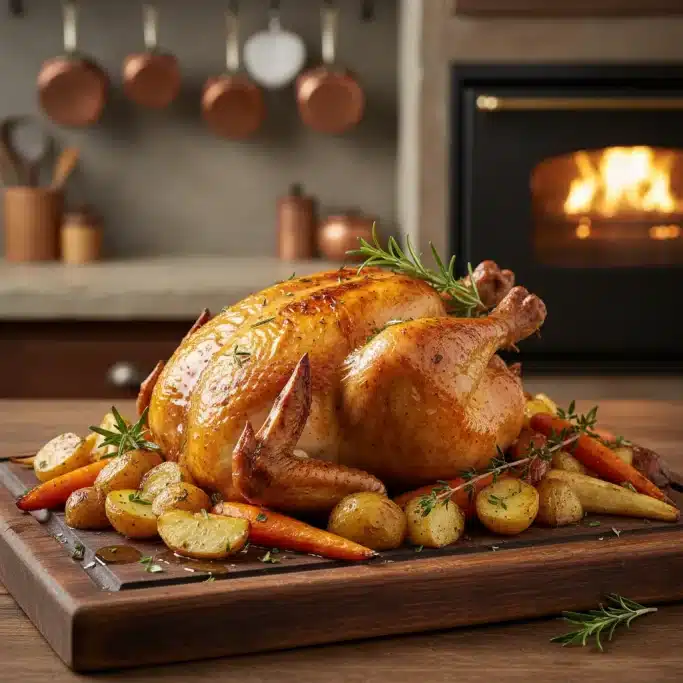
Classic Herb-Roasted Chicken
A staple for a reason, this recipe yields a juicy chicken with incredibly crispy, flavorful skin.
Ingredients:
- 1 (3-4 lb) whole chicken
- 2 tbsp olive oil
- 1 tbsp fresh rosemary, chopped
- 1 tbsp fresh thyme, chopped
- 1 tsp garlic powder
- Salt and freshly ground black pepper to taste
- 1 lemon, halved
- 1 head garlic, cut in half horizontally
- Optional: chopped potatoes, carrots, onions for the pan
Instructions:
- Preheat oven to 425°F (220°C).
- Pat chicken thoroughly dry with paper towels. Truss if desired.
- In a small bowl, combine olive oil, rosemary, thyme, garlic powder, salt, and pepper. Rub mixture all over the chicken, including under the skin.
- Place lemon halves and garlic head inside the chicken cavity.
- If using, scatter chopped vegetables in the bottom of a roasting pan. Place chicken on a V-rack in the roasting pan.
- Roast for 15-20 minutes at 425°F, then reduce oven temperature to 375°F (190°C) and continue roasting for 45-60 minutes, or until an instant-read thermometer inserted into the thickest part of the thigh (without touching bone) reads 165°F (74°C).
- Remove chicken from oven, transfer to a cutting board, tent with foil, and let rest for 10-15 minutes before carving.
Garlic and Herb Crusted Pork Loin
A tender and flavorful pork roast that’s perfect for a Sunday dinner.
Ingredients:
- 2-3 lb boneless pork loin roast
- 2 tbsp olive oil
- 4 cloves garlic, minced
- 1 tbsp fresh thyme, chopped
- 1 tbsp fresh rosemary, chopped
- 1 tsp dried oregano
- Salt and freshly ground black pepper to taste
Instructions:
- Preheat oven to 400°F (200°C).
- Pat pork loin dry. In a small bowl, combine olive oil, minced garlic, thyme, rosemary, oregano, salt, and pepper.
- Rub the herb mixture all over the pork loin.
- Place the pork loin in a roasting pan.
- Roast for 30-45 minutes, or until an instant-read thermometer inserted into the thickest part of the roast reads 140°F (60°C) for medium.
- Remove from oven, transfer to a cutting board, tent with foil, and let rest for 10-15 minutes. The temperature will rise to 145°F (63°C) during resting.
- Slice and serve.
Roasted Root Vegetables with Balsamic Glaze
A vibrant and delicious side dish that complements any roasted meat.
Ingredients:
- 2 lbs mixed root vegetables (carrots, parsnips, sweet potatoes, red potatoes), peeled and chopped into 1-inch pieces
- 2 tbsp olive oil
- 1 tsp dried thyme
- Salt and freshly ground black pepper to taste
- 2 tbsp balsamic vinegar
- 1 tsp maple syrup (optional, for extra sweetness)
Instructions:
- Preheat oven to 425°F (220°C).
- In a large bowl, toss the chopped root vegetables with olive oil, thyme, salt, and pepper until evenly coated.
- Spread the vegetables in a single layer on a large baking sheet (or two if necessary to avoid overcrowding).
- Roast for 25-35 minutes, stirring halfway through, until tender and caramelized.
- While vegetables are roasting, whisk together balsamic vinegar and maple syrup (if using).
- Once vegetables are done, drizzle with the balsamic glaze and toss to coat. Serve immediately.
The Future of Roasting in 2026 and Beyond
As we look to 2026, the art of roasting main dishes continues to evolve with new technologies and culinary trends. Smart ovens with integrated thermometers and AI-powered cooking suggestions are becoming more common, making it even easier to achieve perfect results. Sous vide followed by a quick roast for searing is also gaining popularity for ultimate precision and tenderness.
Furthermore, there’s a growing emphasis on sustainable and locally sourced ingredients, which means selecting high-quality, ethically raised meats and seasonal vegetables will become even more central to the roasting experience. Experimentation with global spices and flavor profiles will also continue to broaden the horizons of traditional roasts.
However, despite technological advancements, the core principles of roasting — understanding heat, seasoning, and patience — will remain timeless. The joy of pulling a perfectly roasted dish from the oven, filling your home with intoxicating aromas, and sharing it with loved ones, is a culinary experience that transcends trends.
Conclusion: Your Journey to Roasting Excellence
Mastering roasting main dishes is a rewarding culinary endeavor that brings incredible flavors and textures to your table. From selecting the right equipment and understanding the science of heat transfer to implementing advanced techniques and troubleshooting common issues, this guide has provided you with a comprehensive roadmap to roasting success in 2026.
Remember that practice makes perfect. Don’t be afraid to experiment with different cuts of meat, combinations of vegetables, and various seasonings. Each roast is an opportunity to learn and refine your skills. With patience, attention to detail, and the knowledge gained from this guide, you are now well-equipped to create perfect, memorable roasted meals every time.
Happy roasting!